
Maximize Greenhouse Energy Savings With Sollum’s Dynamic LED Grow Lights
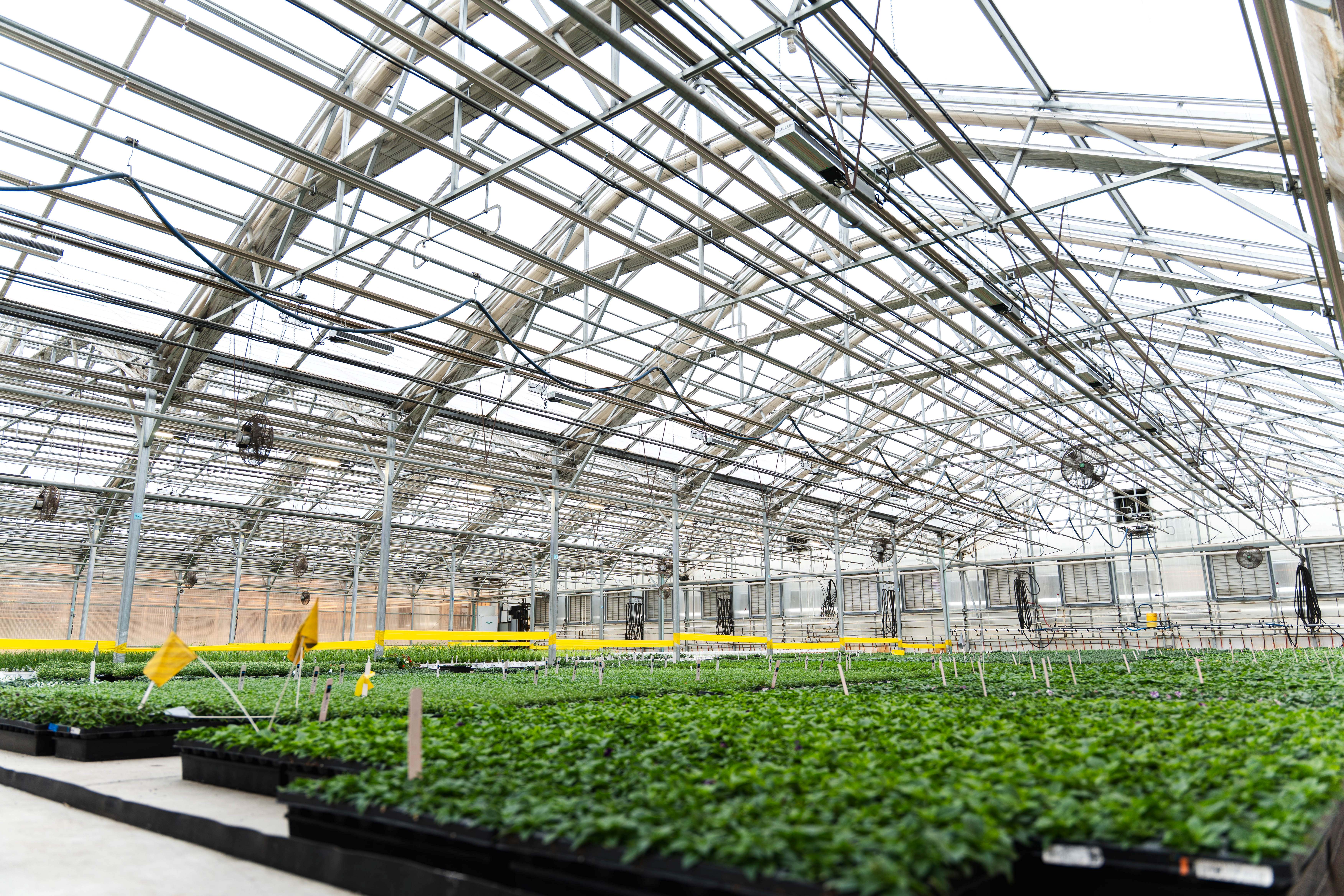
Maximize Greenhouse Energy Savings With Sollum’s Dynamic LED Grow Lights.
Commercial greenhouse operators who switch from HPS to LED lighting reduce their lighting energy consumption by 35% to 50%. This savings alone makes LED a smart investment. But growers who take the next step of upgrading to dynamic LED lighting unlock even greater efficiency and cost reductions that static LED systems cannot deliver.
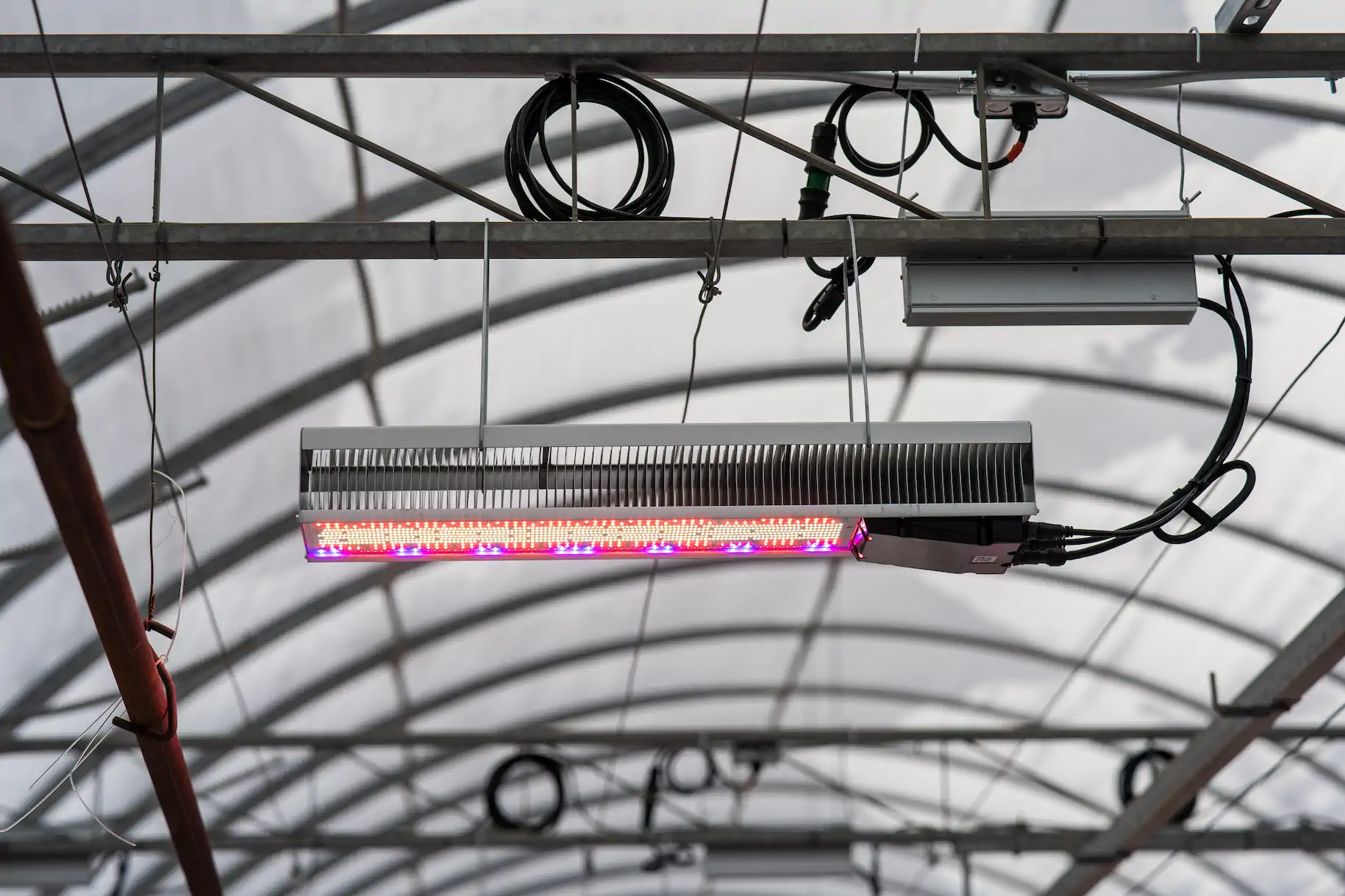
Dynamic LED greenhouse lighting adjusts the light spectrum and intensity in real time based on ambient conditions and crop stage. This precision reduces kilowatt-hour consumption and eliminates lighting waste. Sollum Technologies’ dynamic LED grow light solution, powered by the SUNaaS® cloud platform, gives growers measurable control over every photon delivered to their crops.
Why Energy Costs Are the Biggest Threat to Greenhouse Profitability
Supplemental lighting ranks among the largest operating expenses in controlled environment agriculture. Crops like tomatoes, cucumbers, and leafy greens require high daily light integrals (DLI), which drives significant electricity usage. Rising utility rates across Ontario and North America compound this challenge, while retailer contracts push growers to produce year-round—increasing the hours that lights stay on.
How HPS Lighting Drives Up Electricity Bills and HVAC Loads
Traditional high-pressure sodium (HPS) lighting has a lower photosynthetic photon efficacy (PPE) than LED lighting. HPS fixtures require more electricity to produce the same amount of photosynthetically active radiation (PAR). HPS systems also convert a large share of input energy into radiant heat rather than useful light. This excess heat forces HVAC systems to work harder to maintain optimal canopy temperatures, adding cooling costs on top of already high lighting bills.
HPS bulbs also have shorter lifespans than LEDs. Double-ended HPS lamps typically last between 10,000 and 24,000 hours, while LED fixtures reliably produce light for more than 50,000 hours—over five years of continuous operation. Frequent HPS bulb replacements disrupt growing cycles and increase maintenance costs. Growers who want to understand the full scope of LED’s competitive advantages over HPS can explore the differences in energy use, lifespan, spectrum control, and crop performance.
Rising Utility Rates and Carbon Compliance Pressure
High electricity costs across Ontario, Quebec, British Columbia, and major U.S. greenhouse regions strain operating budgets every year. Sustainability certifications and carbon reporting requirements add further pressure on energy-intensive operations. Coupling rising rates with increasing regulatory expectations around kilowatt-hour reduction makes now the right time to evaluate a transition to LED lighting.
How Much Energy Do LED Grow Lights Save Over HPS?
Quantifying the greenhouse energy savings from LED upgrades helps growers make informed decisions about their lighting investments.
Efficacy Comparison: 1.7 µmol/J (HPS) vs. 2.7-4.0 µmol/J (LED)
Micromoles per Joule (µmol/J) measures fixture efficacy—how efficiently a lighting system converts electricity into usable PAR output. Research from Greenhouse Product News and Michigan State University shows that double-ended 1,000W HPS fixtures achieve an efficacy of approximately 1.7 µmol/J. Modern commercial LED fixtures range from 2.7 to 4.0 µmol/J, with top-tier models exceeding 4.0 µmol/J. This means top-tier LED fixtures can produce more than twice as much usable plant light per watt of electricity consumed compared to double-ended 1,000W HPS fixtures. Higher efficacy translates directly to lower electricity consumption when meeting photosynthetic photon flux density (PPFD) targets.
Real-World Data: 35% to 50% Validated Lighting Energy Reductions
A study funded through a Minnesota Department of Commerce Conservation Applied Research and Development (CARD) grant validated that controlled crop environments lit with LED lamps achieve a 43% energy savings compared to conventional HPS lamps. The estimated payback period was 2.2 years, with net present value savings of $5,745 in energy and maintenance costs over the LED fixtures’ five-year lifespan.
Research from Wageningen University, published in Applied Energy (Katzin et al., 2021), found that LEDs consume approximately 40% less electricity than HPS for equivalent light output. When total greenhouse energy demand was modeled—including the reduced heating contribution from LEDs—the study projected overall energy savings of 10% to 25% across multiple climate scenarios, from subtropical China to arctic Sweden. Taken together, these studies place lighting-specific reductions in the 35% to 50% range, depending on facility conditions and operating hours.
HVAC Savings: Lower Radiant Heat Means Lower Cooling Costs
LEDs emit significantly less radiant heat toward the crop canopy compared to HPS. Research published in Frontiers in Plant Science (NCBI) confirms that while HPS lamps radiate heat directly toward plants through longwave infrared radiation, LED fixtures dissipate thermal energy through convection—away from the growing area. Growers report that HVAC systems run less frequently after switching to LED, reducing cooling costs and making temperature and humidity management more predictable.
Why Static LED Leaves Energy Savings on the Table
Switching from HPS to static LED delivers significant savings, but it does not capture the full efficiency potential. Sollum’s white paper on dynamic lighting and energy efficiency explains how fixed-intensity lighting still wastes electricity under changing greenhouse conditions.
Fixed Output Wastes Energy on Sunny Days and During Off-Peak Growth Stages
Static LED fixtures deliver the same PPFD regardless of how much ambient sunlight is already reaching the crop. On sunny days, this creates over-lighting that wastes electricity without improving DLI targets. Crops also require different light intensities across growth stages—propagation, vegetative, and finishing phases each have different needs. Static LEDs inevitably over-light during some phases and under-light during others. Learn more about what static LED misses and what dynamic LED delivers.
Manual Dimming Cannot Match Real-Time Ambient Light Changes
Static LEDs allow manual dimming, but no grower can realistically adjust output with every fluctuation in sunlight and cloud cover throughout the day. Manual adjustments create inconsistencies that reduce potential energy savings and compromise DLI accuracy.
How Dynamic LED Lighting Maximizes Energy Savings
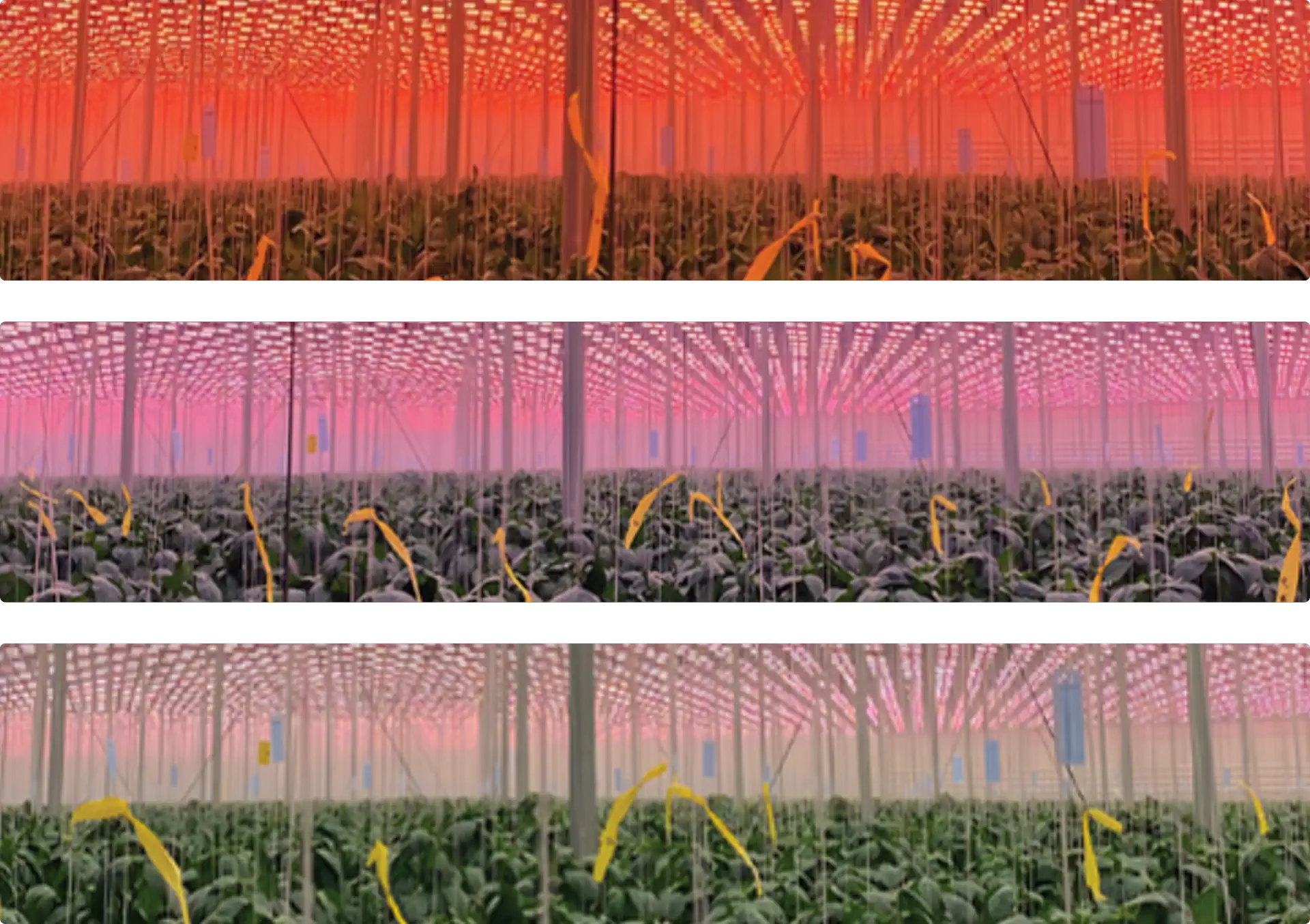
Dynamic lighting takes greenhouse LED energy savings beyond what static LEDs offer. Dynamic systems continuously optimize light output based on precise, real-time greenhouse conditions. Sollum’s SUNaaS® platform adjusts the lighting for each zone to minimize energy usage and deliver crop-specific light recipes at every moment of the day. Sollum’s own data shows its dynamic optimization delivers an additional 16.8% efficiency gain compared to standard LED systems, bringing total energy savings to as high as 56.8% versus HPS.
Ambient Light Integration: Automatic Intensity Adjustment to Match Sunlight
Sollum’s dynamic LEDs use sensors to measure ambient sunlight and automatically adjust fixture intensity to maintain target DLI levels. The SUNaaS® software handles these adjustments continuously, reducing manual labour and ensuring stable PPFD delivery despite changing weather conditions. This ambient light compensation is a core reason dynamic systems save more energy than static LEDs—fixtures dim automatically when the sun provides sufficient light and increase output only when needed.
Zone-Specific Control: Different Intensities for Different Crops
Different crops and growth stages require different lighting strategies. Sollum’s multi-zone lighting system allows growers to implement separate zones for propagation, finishing, and distinct crop varieties—all within the same greenhouse. Instead of delivering uniform lighting everywhere, growers reduce waste by targeting specific light recipes for each zone. This is especially valuable for mixed-crop facilities growing tomatoes, leafy greens, and peppers side by side.
Energy Monitoring and Recipe Optimization Through the SUNaaS® Cloud Platform
The SUNaaS® platform uses AI to analyze weather patterns, energy consumption, and crop data in real time. It connects to Sollum’s LED fixtures to monitor and control the light intensity and spectrum for each zone. The software combines real-time monitoring with growth-stage data to develop and refine custom light recipes for individual crops. As Sollum’s CTO François R.-Moisan explains, each fixture “behaves like a computer on the greenhouse ceiling,” using AI to improve performance over time through automatic software updates.
Proven Results: Energy Savings and Yield Gains in Real Greenhouses
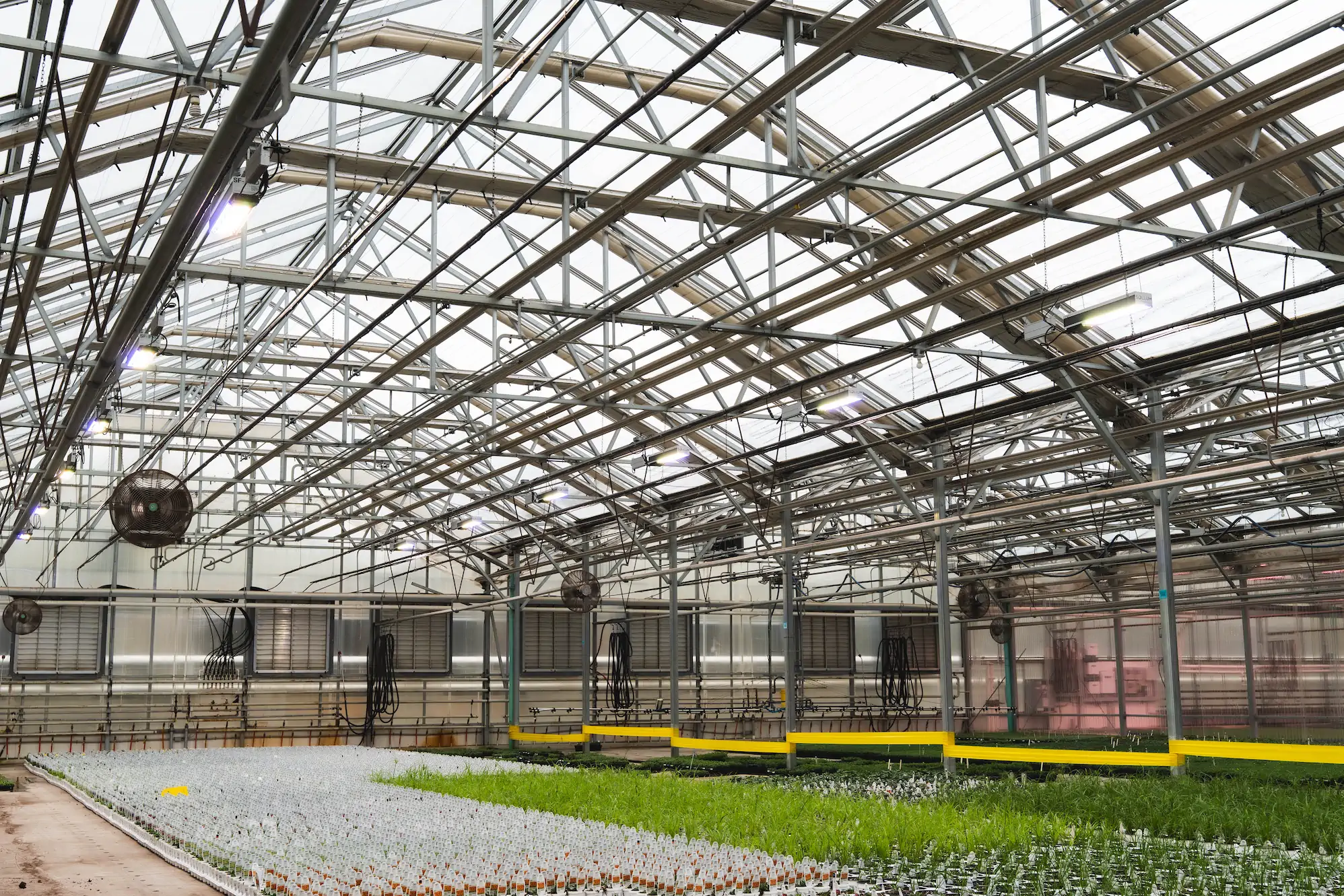
Sollum’s dynamic LED solution is not a theoretical concept. It delivers measurable results in commercial greenhouse operations. Winner of Deloitte’s Technology Fast 50 Award, a Greenhouse Technology Award, and a Sapphire Award, Sollum has deployed its technology across more than 100 acres of greenhouses in North America and Europe. Case studies include:
- Tomatoes: Up to +19.5% yield increase with adaptive spectrum strategy versus broad-spectrum static LED lighting
- Mini cucumbers: +16.7% average yield increase after switching from static LED
- Peppers: Proven success in winter pepper production under dynamic LEDs in Canada
- Cannabis: Up to 40% yield increases with enhanced potency through optimized light recipes compared to HPS.
These results demonstrate that dynamic LED lighting does more than save energy—it drives measurable improvements in crop yield, quality, and profitability. Hear directly from a grower about the transition from HPS to dynamic LED and how quickly results followed.
Calculating Energy Savings With LED Greenhouse Lighting
Switching your greenhouse lighting from HPS to dynamic LED requires an upfront investment. The resulting energy savings and reduction in maintenance costs make this investment worthwhile after a short payback period.
Key Inputs: Current Wattage, Hours of Operation, Electricity Rate, and Rebate Eligibility
Determining your potential ROI starts with gathering your current electricity rate, daily operating hours, total fixture count, fixture wattage, utility pricing tiers, and rebate eligibility. Larger facilities with higher fixture counts and longer operating hours typically see greater absolute energy savings. Sollum’s team works with growers to model these inputs and deliver custom energy savings estimates based on each operation’s specific conditions.
Payback Period: 2 to 4 Years for Many Commercial Operations
The Minnesota CARD study found a payback period of 2.2 years for LED lamps, with net present value savings of $5,745 in energy and maintenance costs over the five-year LED fixture lifespan. Industry data supports a payback window of 2 to 4 years for many commercial greenhouse operations, with facilities paying higher electricity rates achieving even faster ROI. Sollum’s DLC-certified fixtures qualify for utility rebates that can further accelerate this timeline.
Rebate and Incentive Programs That Accelerate Payback
Rebates and incentive programs across North America shorten the payback period and reduce the financial strain of LED upgrades. In Ontario, Save on Energy offers both the Retrofit Program (covering up to 50% of eligible horticultural lighting project costs) and the Instant Discounts Program for qualifying LED products. Quebec’s Hydro-Québec Efficient Solutions program covers up to 90% of LED conversion costs for eligible businesses. U.S. programs vary by state and utility provider, with some covering up to 100% of horticultural lighting equipment costs. Sollum provides end-to-end rebate application support to help growers maximize available incentives.
Energy Efficiency as a Sustainability Strategy
Reducing energy consumption is not just about lowering costs. Growers face increasing pressure from retailers, regulators, and consumers to demonstrate sustainable growing practices. High energy consumption from HPS lighting conflicts with carbon reporting requirements and sustainability certifications. Dynamic LED lighting directly addresses these concerns by cutting electricity use, lowering greenhouse gas emissions proportional to energy reduction, and supporting compliance with green building and agricultural sustainability standards. Sollum’s future-proof lighting approach ensures that growers’ investments remain aligned with sustainability goals as standards evolve.
Request a Custom Energy Savings Estimate for Your Greenhouse
If you currently use HPS lighting, compare your operating costs with the potential energy savings from switching to a dynamic LED system. Sollum’s team provides custom energy assessments that include fixture-level modelling, rebate eligibility analysis, and projected ROI based on your specific crops, operating hours, and electricity rates.
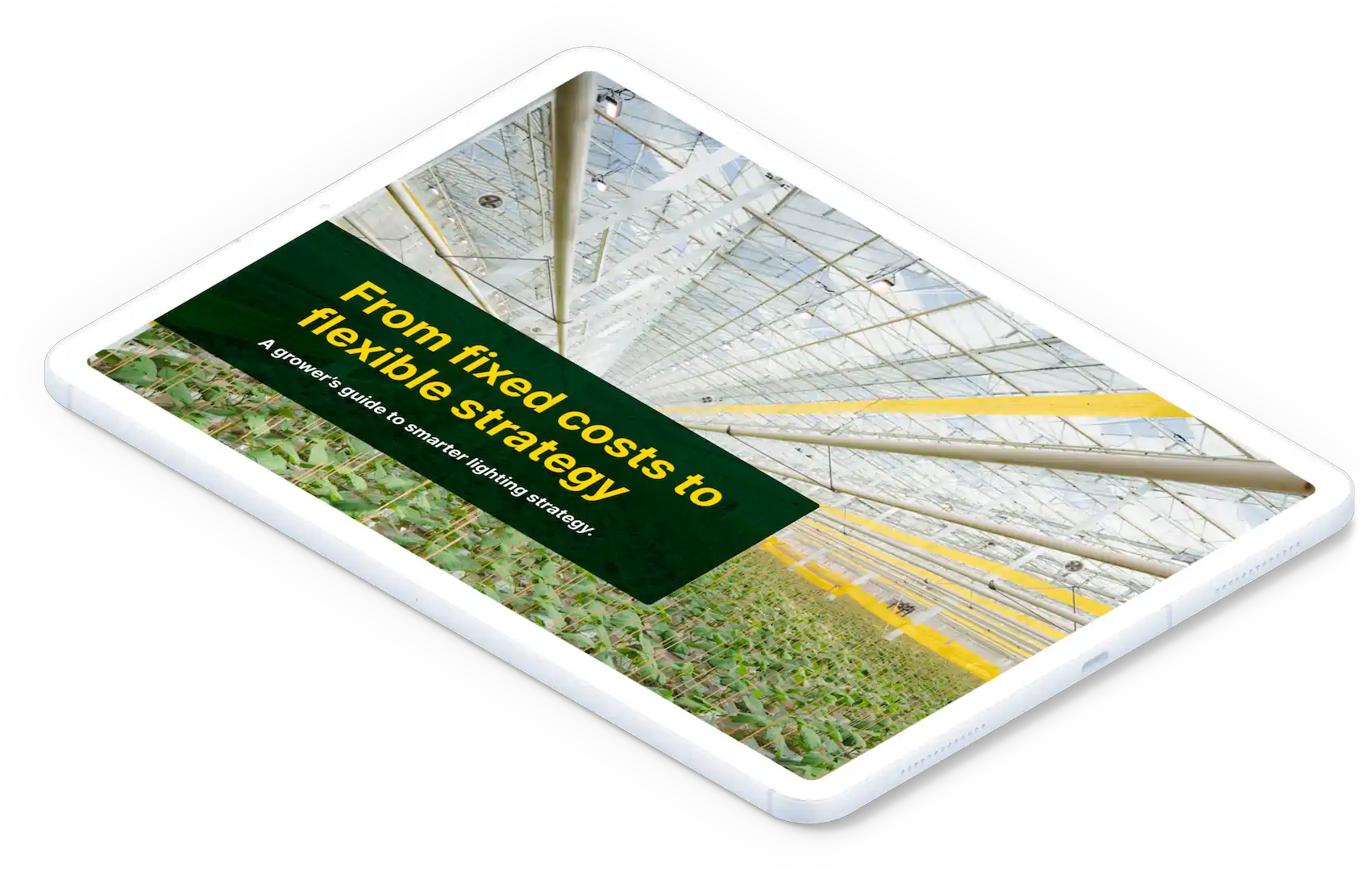
Contact Sollum Technologies to request your energy savings estimate, or download the Grower’s Guide for a practical framework on LED selection, HPS replacement strategies, and long-term ROI planning.
Learn about the new energy savings feature
About Sollum Technologies
As the leader in advanced dynamic LED lighting for commercial greenhouses, Sollum Technologies offers a unique proposition. The comprehensive solution provides the flexibility to adapt lighting in real time to meet crop needs at every stage of growth, supports producers operational and financial goals in a sustainable manner, and offers unmatched technical and agronomic guidance. Designed and manufactured in North America, Sollum's technology is deployed across major greenhouse operations to support year-round production, consistent quality, and smarter energy use.
Founded in 2015, Sollum is headquartered in Montréal (Québec, Canada) with regional offices in Kingsville (Ontario, Canada) and Atlanta (Georgia, USA). For more information, visit sollum.tech.

Stay informed on growing
Get the latest news, innovations, and insights delivered to your inbox
