
How to Choose the Best Commercial Greenhouse LED System

The best commercial greenhouse LED lighting system is one that adapts spectrum, intensity, and DLI in real time to crop needs, seasonal light, and energy conditions.
Ask five greenhouse growers what the “best” LED lighting system is, and you’ll likely receive five different answers.
Some will point to efficiency numbers.
Others to upfront cost.
Others to brand reputation or what their neighbour installed last year.
But as LED lighting has become standard in commercial greenhouses, one thing has become clear: the question itself needs to evolve.
Why?
Because in greenhouse production, there is no single “best” LED system. The right system is the one that performs best for your crop, your greenhouse infrastructure, and your business goals year over year.
Why This Question Matters More Than Ever?
Energy costs are increasingly volatile. Light availability changes dramatically throughout the year. Growers are under pressure to deliver consistent quality, higher yields, and predictable returns. LEDs are no longer a differentiator. They’re the baseline.
What separates strong lighting strategies from costly compromises is not what’s listed on a spec sheet, but how well a lighting system adapts to the operational reality of a commercial greenhouse.
The Blind Spot in Traditional LED Comparisons
When growers compare LED lighting fixtures, the conversation often focuses on:
- Fixture efficiency (µmol/J)
- Light output
- Purchase price
- Warranty length
Result: Looks good on paper.
The analysis often overlooks the dynamic reality of greenhouse production.
What’s not measured:
- Seasonal shifts and daily changes in natural light
- Differences between zones within the same greenhouse
- Crop-specific responses to spectrum and intensity
- Changing energy tariffs and operational priorities
Result: Real-world crop performance.
A fixture that appears “best” on paper can quickly become limiting if it cannot adapt to changing conditions.
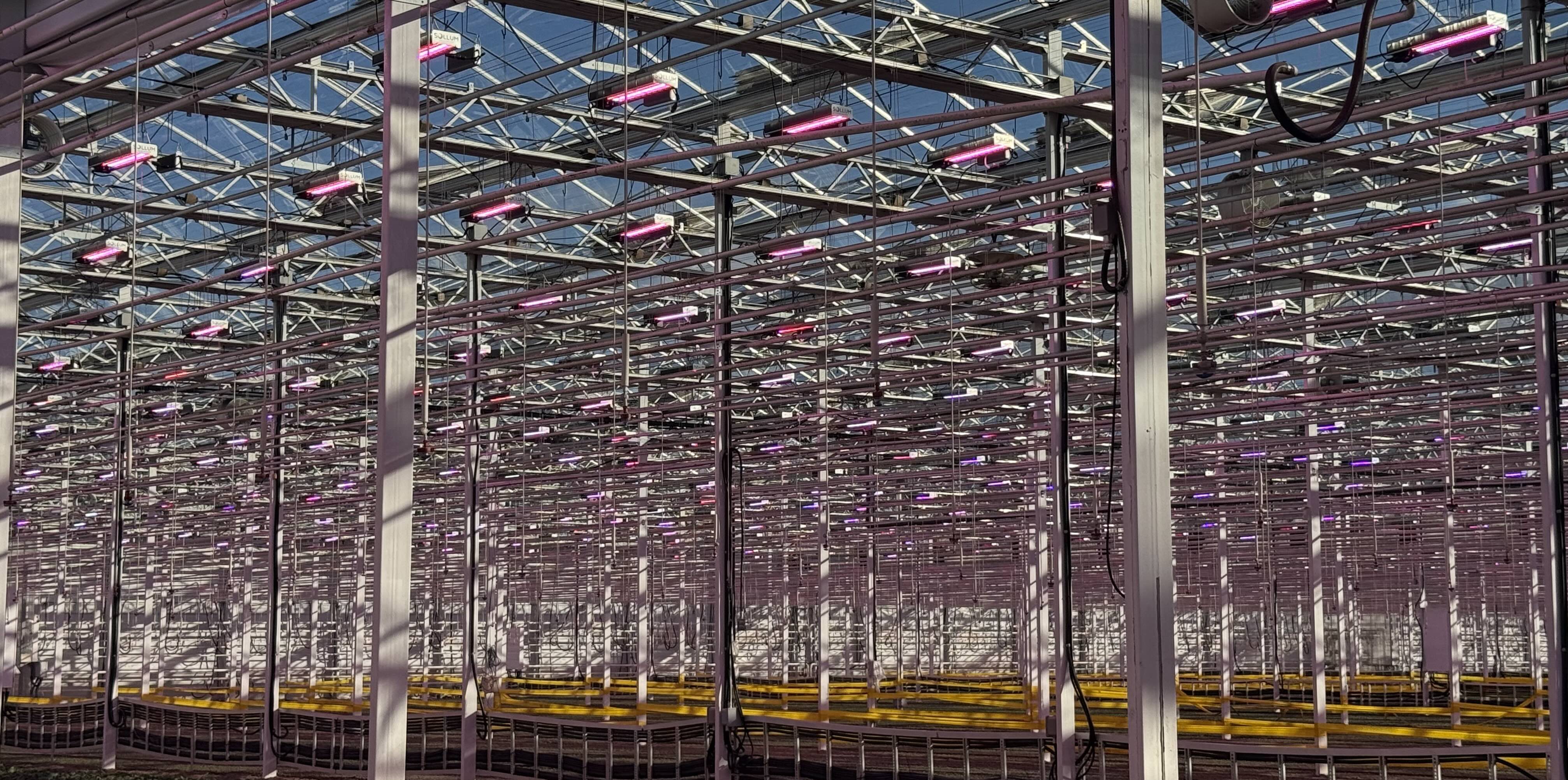
What to Look for in a Modern Commercial Greenhouse LED System
Today, the strongest greenhouse LED lighting systems are defined less by individual features and more by how they perform over time.
1. Spectrum flexibility
Full spectrum is important, but flexibility is what creates value.
Different crops, growth stages, and objectives require different spectral strategies. For example, a grower may increase blue light to promote compact growth in young plants, or introduce more far-red light during winter months to encourage elongation and flowering.
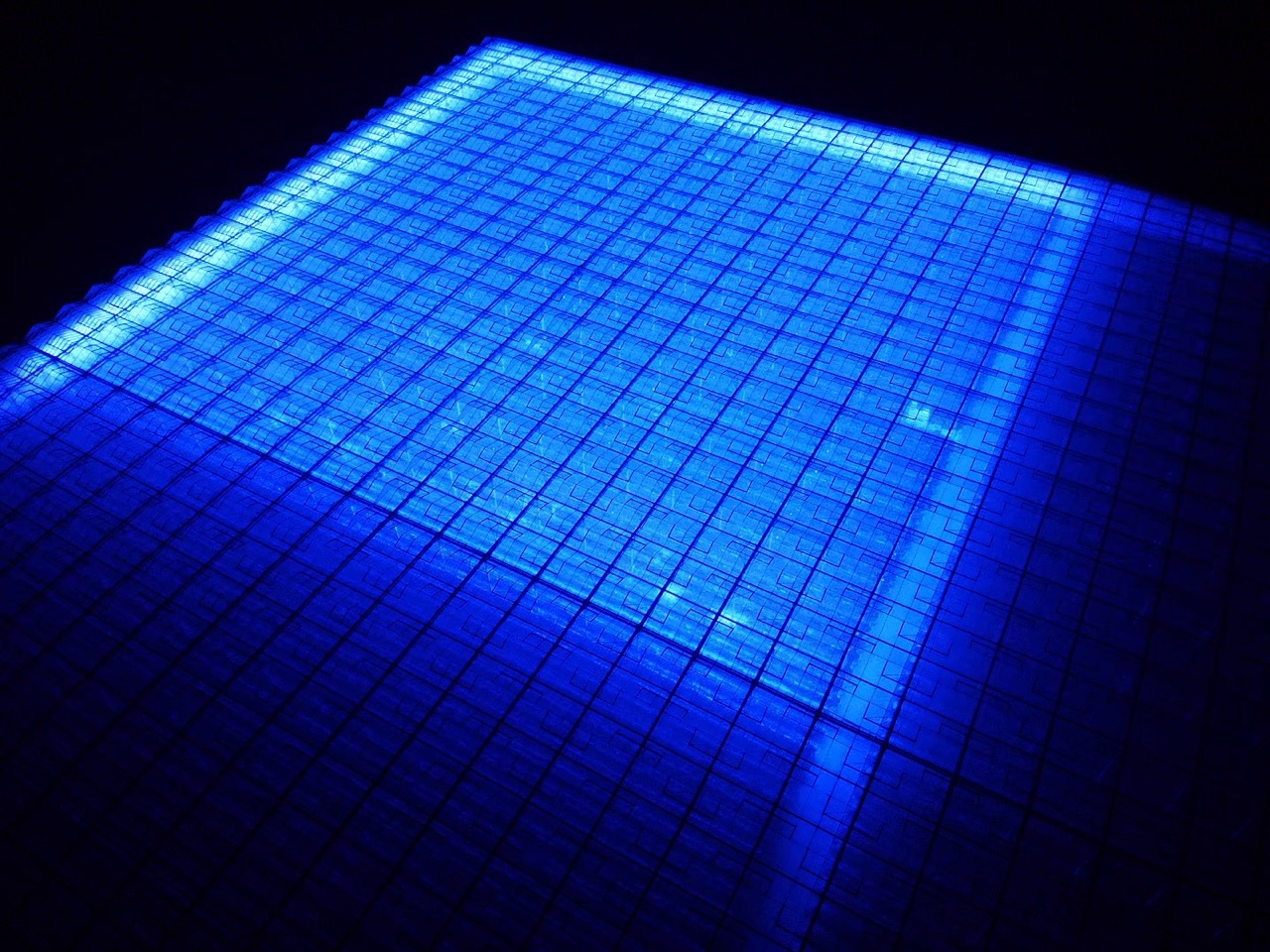
A system that allows these adjustments gives growers more control over plant behaviour, not just light delivery.
2. Precise intensity control
Light levels shouldn’t be locked in for months at a time. The ability to adjust intensity allows growers to respond to daily and seasonal variations in natural light and avoid over- or under-lighting.
3. DLI-based control without added complexity
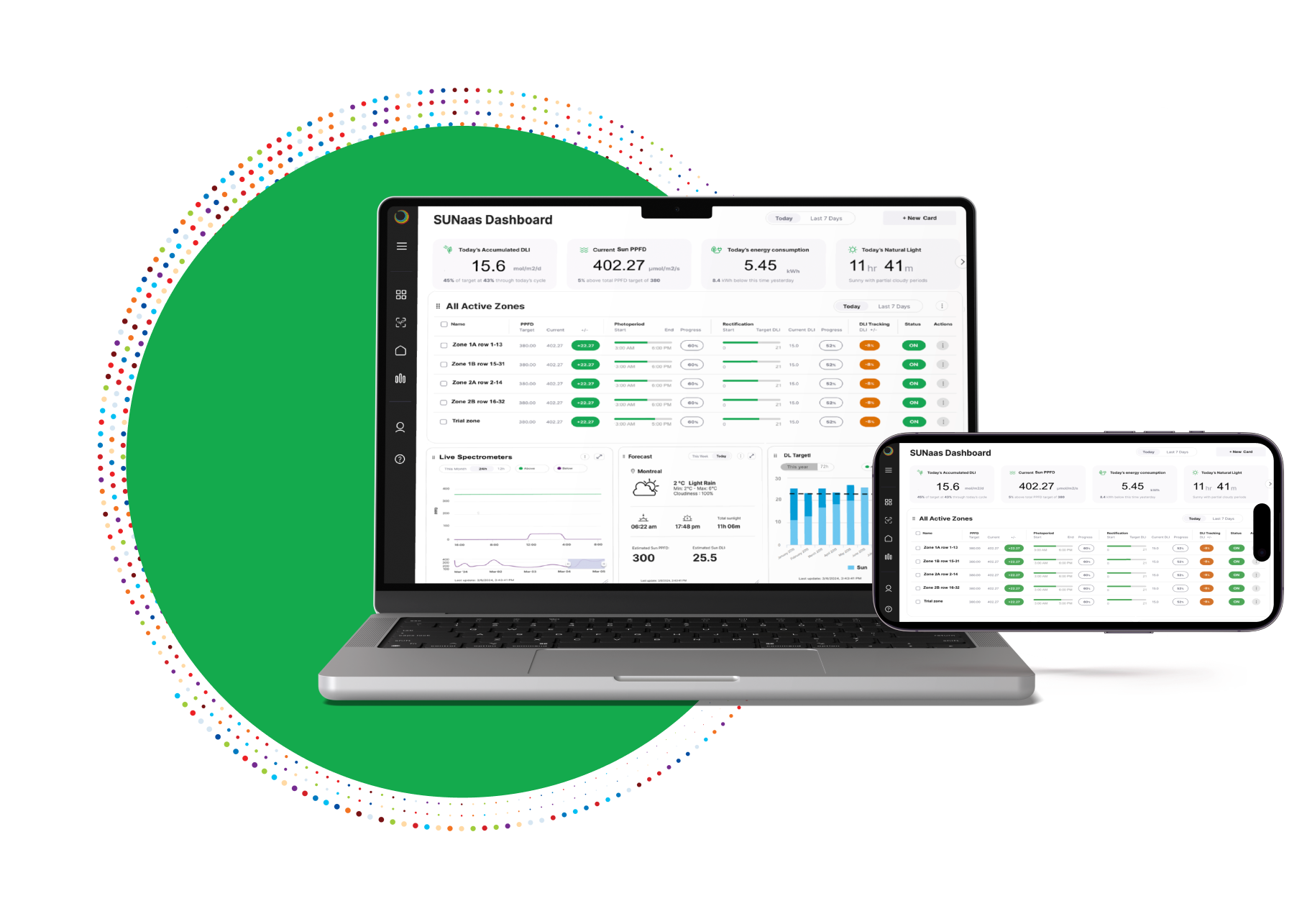
Using DLI (Daily Light Integral) helps align lighting decisions with plant needs, eliminating guesswork.
Crucially, the best systems automate this process. Instead of requiring constant manual adjustments, they dynamically modulate light output throughout the day to hit precise DLI targets— even as natural light conditions change.
4. Zone-level control
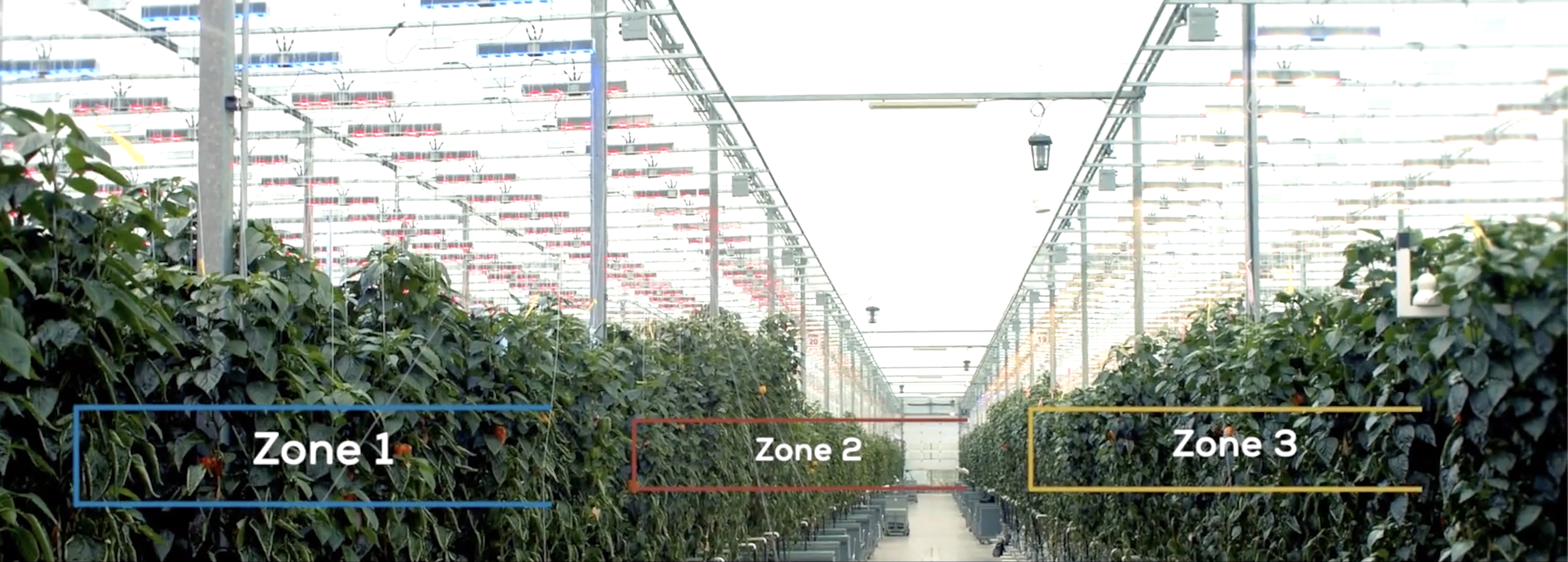
Greenhouse conditions are not uniform. A lighting system should allow zone-by-zone adjustments rather than enforcing a single lighting strategy across the entire facility.
5. Integration with existing systems
The most effective lighting systems work seamlessly with climate controls and greenhouse operations.
6. Long-term support and adaptability
A system should be able to evolve with changing lighting strategies without requiring a full reinvestment.
Static LED Lighting vs. Dynamic Lighting Strategies
Many LED systems in greenhouses still operate on static schedules. Once installed, light recipes are set and adjusted manually, if at all.
Dynamic lighting strategies take a different approach.
Instead of exposing plants to fixed lighting conditions, dynamic lighting adapts to:
- Crop needs
- Natural light availability
- Seasonal conditions
- Operational and energy constraints
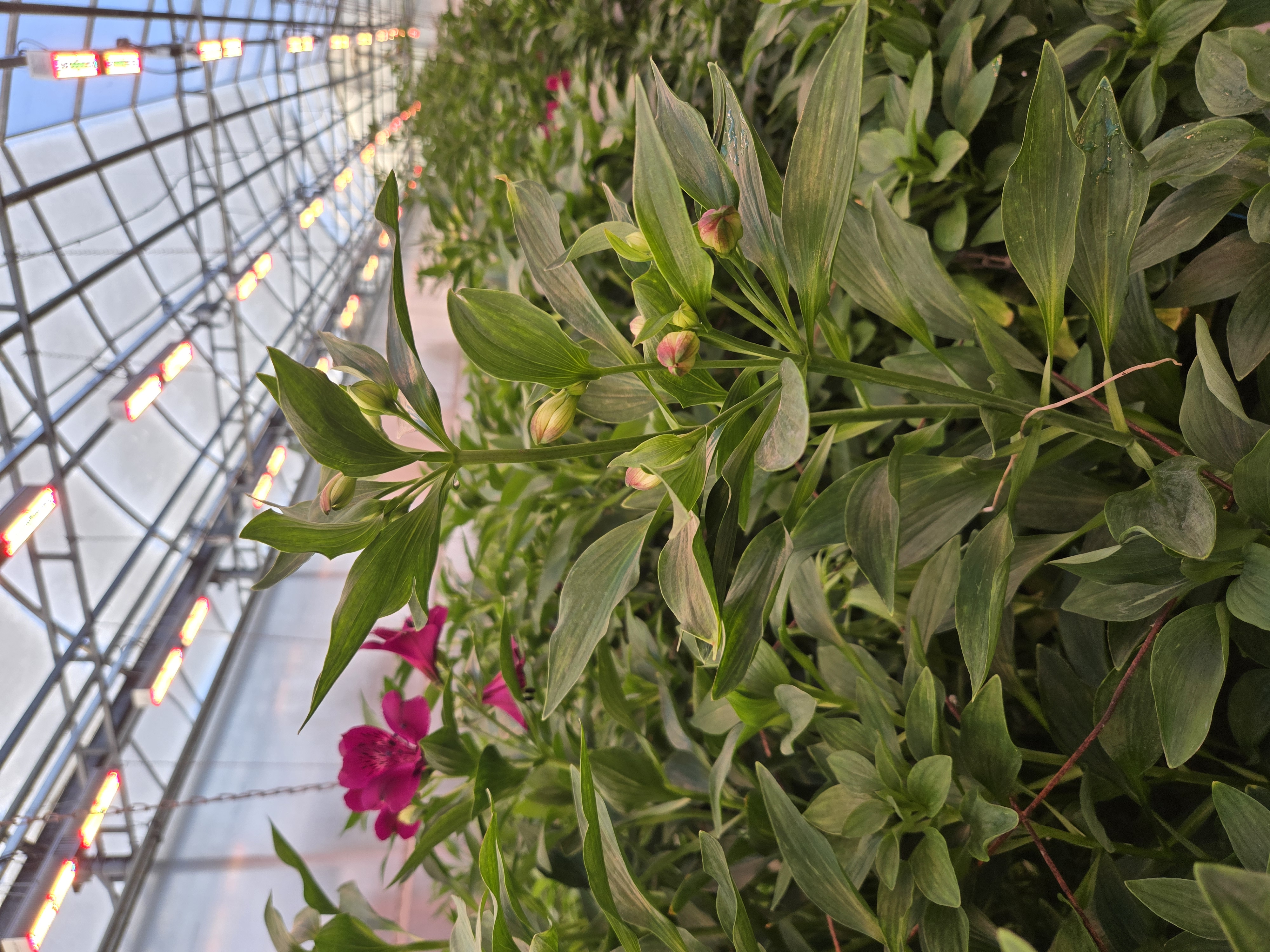
The spectrum, intensity, and timing can be adjusted in real time — and by zone — supporting both crop performance and energy efficiency.
The system’s AI manages complexity, so growers don’t have to.
What “Best” Look Like in Real GreenhouseOperations?
In practice, the best commercial greenhouse LED systems help growers:
- Maintain consistent crop performance across seasons
- Improve uniformity and predictability
- Reduce energy use per kilogram produced
- Adjust strategies without replacing hardware
- Use lighting as a performance lever rather than a fixed cost
It’s less about having the most powerful fixture, and more about having a system that adapts as conditions change
Choosing the Right System for your Greenhouse
The right question is no longer: “Which LED system is the best?”
It’s: “Which system gives me the most control, flexibility and confidence as conditions change, and addresses the plants’ requirements at each stage of growth, and the grower’s objectives?”
Because greenhouses are living systems and lighting should work the same way.
Ready to move beyond static specs?
Download Sollum's Grower's Guide for a practical framework on commercial greenhouse grow lights, HPS replacement strategies, and smart greenhouse lighting decisions supporting long-term performance and ROI.
Lighting decisions should open infinite possibilities. Not lock you in.
As featured in Greenhouse Grower
Learn about the new energy savings feature
About Sollum Technologies
As the leader in advanced dynamic LED lighting for commercial greenhouses, Sollum Technologies offers a unique proposition. The comprehensive solution provides the flexibility to adapt lighting in real time to meet crop needs at every stage of growth, supports producers operational and financial goals in a sustainable manner, and offers unmatched technical and agronomic guidance. Designed and manufactured in North America, Sollum's technology is deployed across major greenhouse operations to support year-round production, consistent quality, and smarter energy use.
Founded in 2015, Sollum is headquartered in Montréal (Québec, Canada) with regional offices in Kingsville (Ontario, Canada) and Atlanta (Georgia, USA). For more information, visit sollum.tech.

Stay informed on growing
Get the latest news, innovations, and insights delivered to your inbox
