
How Dynamic LED Lighting Improves Propagation Success for Flower Growers
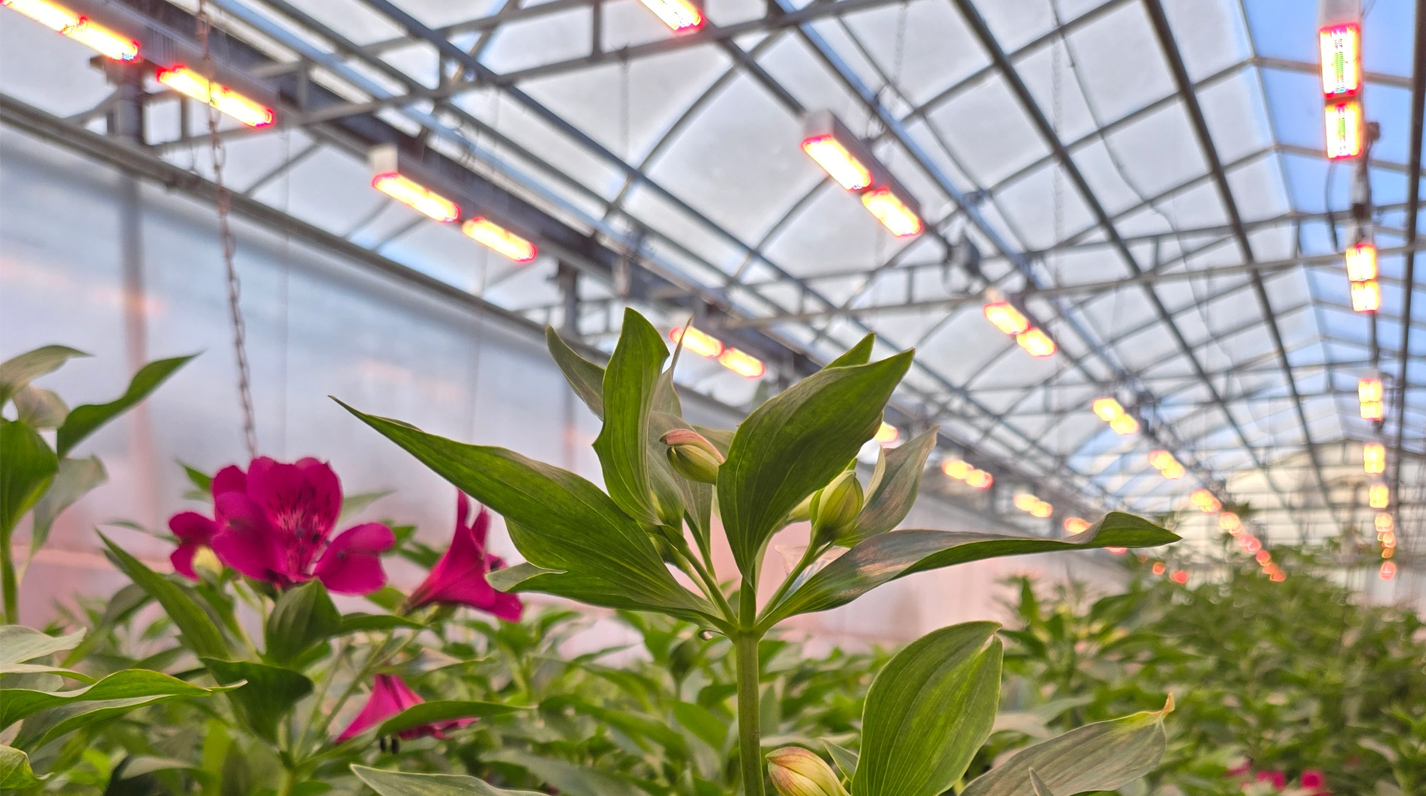
In floriculture, success starts at propagation.
A cutting that roots unevenly or a plug that stretches under the wrong spectrum will carry those issues all the way to harvest. Yet many growers still rely on static LED lighting that fail to adapt to the plant's changing needs.
Dynamic LED lighting is changing that. By adjusting spectrum and intensity in real time, growers can optimize each stage of propagation and avoid these issues. LED grow lights that adapt in real time for flower propagation (including adaptive LED grow lights with spectrum control for greenhouse propagation) represent a major turning point in commercial floriculture operations.
Sollum Technologies explains why stage one and stage three recipes should never match through spectrum modulation.
Why Propagation Is the Highest Stakes Stage in Floriculture Production
Propagation sets the foundation for everything that follows. It is during these early stages that transplant quality, stem thickness, root dry mass, and crop uniformity get established for bedding plants and where LED lighting plays a critical role. Mistakes in week one will compound, and poorly rooted cuttings for commercial greenhouse operations mean fewer sellable units and more crop losses. The right LED propagation lights for flowers close that gap, but only if they adapt across stages.
What Goes Wrong When Propagation Lighting Is Static
Static LED systems deliver the same photosynthetic photon flux density (PPFD) and spectrum at every stage. But plants don't have static needs. Callus development needs PPFD of 50 to 70 µmol/m²/s and a daily light integral (DLI) of three to five mol/m²/day, while root fill needs 150 to 500 µmol/m²/s and a DLI of 10 to 12 mol/m²/day. A fixed system cannot serve both without compromising one stage or the other and actively limits crop potential, causing plant stress, elongation, weak roots and poor development.
Why Winter Months Amplify the Problem for Canadian and Northern US Growers
Canadian greenhouse growers and northern US operations rely almost entirely on supplemental or sole-source lighting in winter. If that lighting isn't precisely controlled, small mistakes quickly become major issues. This makes supplemental lighting for propagation even more essential. It is then even more important to avoid a fixed lighting optimized for later stages (root fill) that can easily overexpose sensitive early-stage cutting (callus).
The Four Stages of Propagation and What Each One Needs From Your Lighting
Vegetative propagation moves through several stages that respond to photosynthetically active radiation (PAR), spectrum, and DLI differently. Each one of these stages requires a different lighting strategy.
Stage 1 — Callus Development: Low Intensity, PPFD 50 to 70 µmol/m²/s
When an unrooted cutting enters the tray, greenhouse LED lights for cuttings must minimize stress to ensure the callus formation. Keep PPFD at 50 to 70 µmol/m²/s and target a DLI of three to five mol/m²/day.
Unrooted cuttings cannot move water efficiently, so lighting must be gentle and of low intensity. Blue light propagation restricts shoot elongation and supports adventitious root formation through auxin signaling and photomorphogenesis. Far-red remains minimal to prevent phytochrome-driven elongation.
Stage 2 — Root Emergence: Blue-Spectrum Emphasis, Gradual Ramp-Up
As roots emerge, a gradual ramp-up of light intensity from 70 to 100 µmol/m²/s is recommended while holding a blue-weighted spectrum to support stem thickness. The spectrum control for greenhouse propagation is really important at this stage. Photoperiod can be extended without triggering premature flowering, as the plant remains in vegetative propagation.
Stage 3 — Root Fill: Higher Intensity, PPFD 150 to 500 µmol/m²/s for Acclimation
Once the root system fills the plug cell, push PPFD 150 to 500 µmol/m²/s using adaptive LED grow lights, with DLI at 10 to 12 mol/m²/day. Red light rooting, meaning a red-dominant or balanced red/blue spectrum, drives photosynthesis and builds root dry mass. Light uniformity across the tray is critical.
Consistent LED lighting for plug production at this stage separates tight, graded trays from variable ones.
Stage 4 — Finished Plug: Full Spectrum Prep for Transplant
At stage four, shift to a full spectrum with a calibrated far-red fraction that mimics post-transplant conditions. The goal is to obtain compact, transplant-ready plugs with consistent crop uniformity, botrytis control, and minimal shoot elongation.
Why Static LED Lighting Systems Cannot Deliver Stage-Accurate Lighting
LED grow lights for flower propagation that cannot shift spectrum and intensity are a compromise by design, optimized for one stage at the expense of all others.
Fixed Spectrum Delivers the Same Light at the Callus Stage as at Root Fill's
A fixture that is set for root fill runs PPFD three to five times higher than a callus stage cutting can handle. It delivers far-red spectra that drives shoot elongation before a root system exists. The light spectrum for root cuttings is fundamentally different from what the callus stage tissue needs.
Manual Adjustments Create Inconsistency and Possibility of Human Error
Growers who manually dim fixtures introduce timing drift, leaving cuttings under the wrong recipe for hours between stage transitions. In a controlled environment agriculture (CEA) operation, manual lighting management is a structural liability.
How Dynamic LED Lighting Automates Spectrum and Intensity per Stage
Dynamic LED greenhouse lighting removes entirely the necessity of manual adjustment, programming in advance recipe transitions based directly on the plant's stage of development and applying it uniformly across every fixture.
How Light Recipes Shift Automatically Through Propagation
A light recipe defines PPFD, spectrum ratios, photoperiod, and DLI targets per crop stage, as shown in this case study. Recipes are sequenced to advance automatically based on calendar days or DLI accumulation. The SUNaaS platform from Sollum Technologies manages recipe sequencing, ambient light integration, and DLI tracking across every greenhouse zone.
Multi-Zone Management: Running Propagation and Finishing Recipes Simultaneously
Multi-zone light management lets one platform control propagation and finishing zones simultaneously on independent recipes. Your callus stage trays at 50 to 70 µmol/m²/s and root fill trays at 300 µmol/m²/s run in separate zones without interference, making consistent liner production achievable across cycles.
Which Flower Crops Benefit Most From Dynamic Propagation Lighting
Commercial LED grow lights for floriculture serve a wide range of crop types, with measurable gains for crops with narrow lighting tolerances or complex photoperiod requirements.
Cut Flowers — Roses, Chrysanthemums, Gerberas
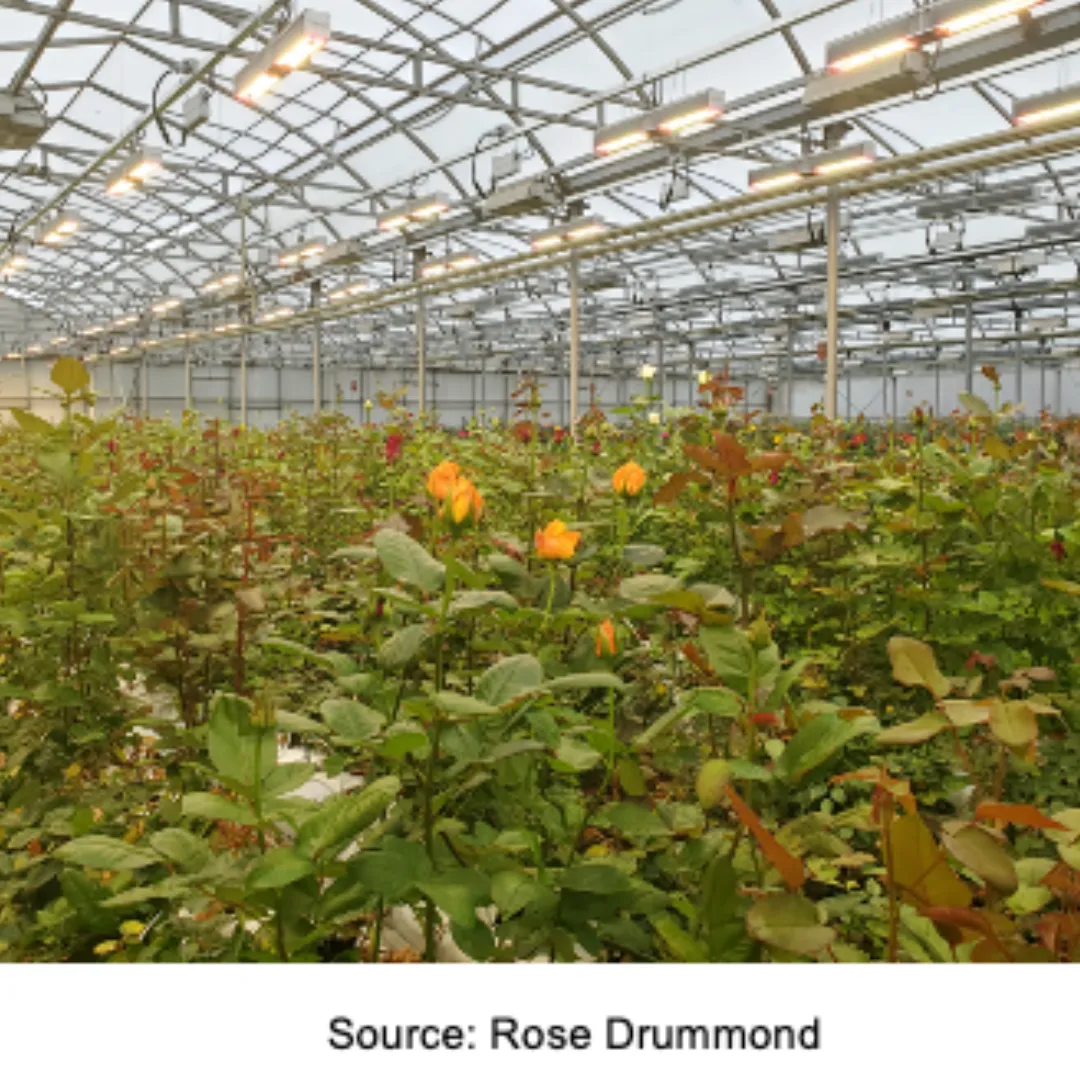
Roses require a photoperiod of 17 to 18 hours for proper extension, and the spectrum affects their coloration. Darker cultivars perform under 50% to 60% red, while lighter cultivars need a balanced recipe to prevent stress-induced shifts. Gerberas thrive under an 11 to 12-hours photoperiod, and far-red spectrum triggers flowering in long-day varieties.
Annuals and Perennials — Petunias, Calibrachoa, Verbena
LED lighting for annuals and perennials must balance shoot elongation control against tight DLI targets. Blue-weighted spectra during early stages restrict stretching and thicken stems, and LED grow lights for flower propagation prepare plugs for finishing production.
Potted Plants — Poinsettias, Orchids, Tropical Foliage
Poinsettias are short-day plants requiring strict photoperiod control through forcing. LED grow lights for ornamental plants must handle the full range of sensitivities across potted plant propagation.
What To Look for in a Dynamic LED Lighting System for Your Propagation Zone
Three capabilities define a smart LED greenhouse lighting system for ornamental propagation.
Spectrum Tunability Across Red, Blue, Green, and Far-Red Channels
The fixture must independently control red, blue, green, and far-red output. A system with only two or three channels cannot produce the range required across all propagation stages.
Automated Recipe Management and Ambient Light Integration
The system must advance through recipe sequences automatically and integrate ambient PAR data. In supplemental lighting applications, natural light varies daily, and a system that cannot respond will cause stage transitions to drift from plant biology.
Agronomic Support and Light Recipe Development
Propagation light recipes are crop- and variety-specific, whether focused on LED lighting for plug production, LED lighting for seedling production, or specialty cut flower liners. Look for a provider that builds and adjusts your recipe based on crop response.
Take the Next Step: Get a Custom Light Recipe for Your Propagation Operation
If you want to improve propagation performance, start with your lighting strategy. Dynamic LED grow lights for flower propagation drive consistent rooted cuttings. Sollum Technologies built the SF-INFINITE fixture and SUNaaS platform to give commercial floriculture growers multi-zone control for ornamental propagation.
Request a custom propagation light recipe for your commercial greenhouse in Ontario and beyond and see the difference precision lighting can make. Contact Sollum Technologies at (866) 220-5455 to get more information.
Learn about the new energy savings feature
About Sollum Technologies
As the leader in advanced dynamic LED lighting for commercial greenhouses, Sollum Technologies offers a unique proposition. The comprehensive solution provides the flexibility to adapt lighting in real time to meet crop needs at every stage of growth, supports producers operational and financial goals in a sustainable manner, and offers unmatched technical and agronomic guidance. Designed and manufactured in North America, Sollum's technology is deployed across major greenhouse operations to support year-round production, consistent quality, and smarter energy use.
Founded in 2015, Sollum is headquartered in Montréal (Québec, Canada) with regional offices in Kingsville (Ontario, Canada) and Atlanta (Georgia, USA). For more information, visit sollum.tech.


Stay informed on growing
Get the latest news, innovations, and insights delivered to your inbox

