
KPU Strawberry Case Study Web
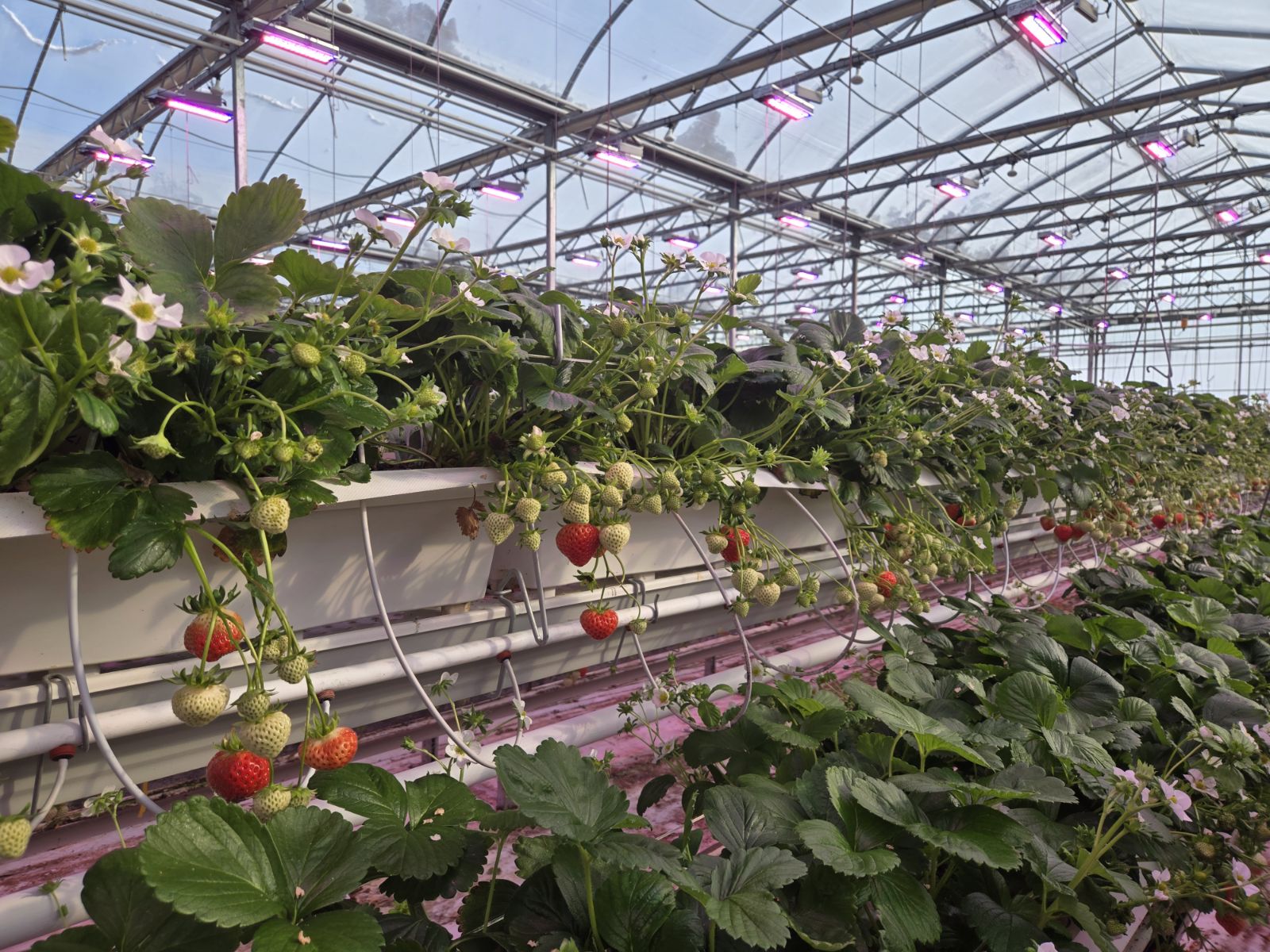
More yield, sweeter fruit and a new tool against disease: KPU tests Sollum's dynamic LED lighting on greenhouse strawberries
At Kwantlen Polytechnic University's Institute for Sustainable Horticulture, a three-year research program is showing how the timing and spectrum of light shape strawberry yield, fruit quality and plant health.

Background
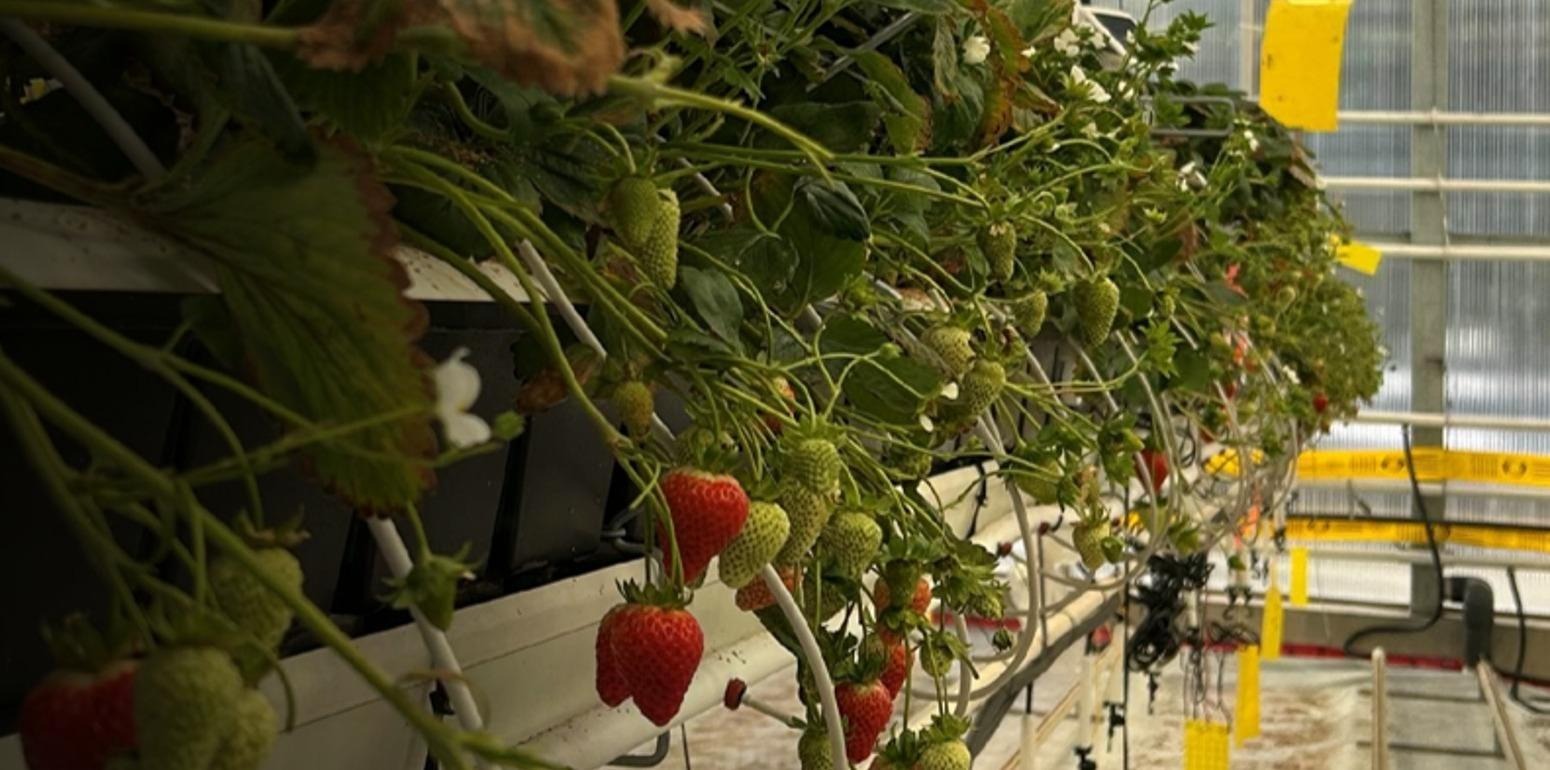
The challenge: Canada has a short outdoor strawberry season and relies heavily on imports the rest of the year. Winter is when prices are highest, but it is also when natural light is too low for good greenhouse production.
The cost: Supplemental lighting closes that gap, but it is also one of the largest operating costs for growers.
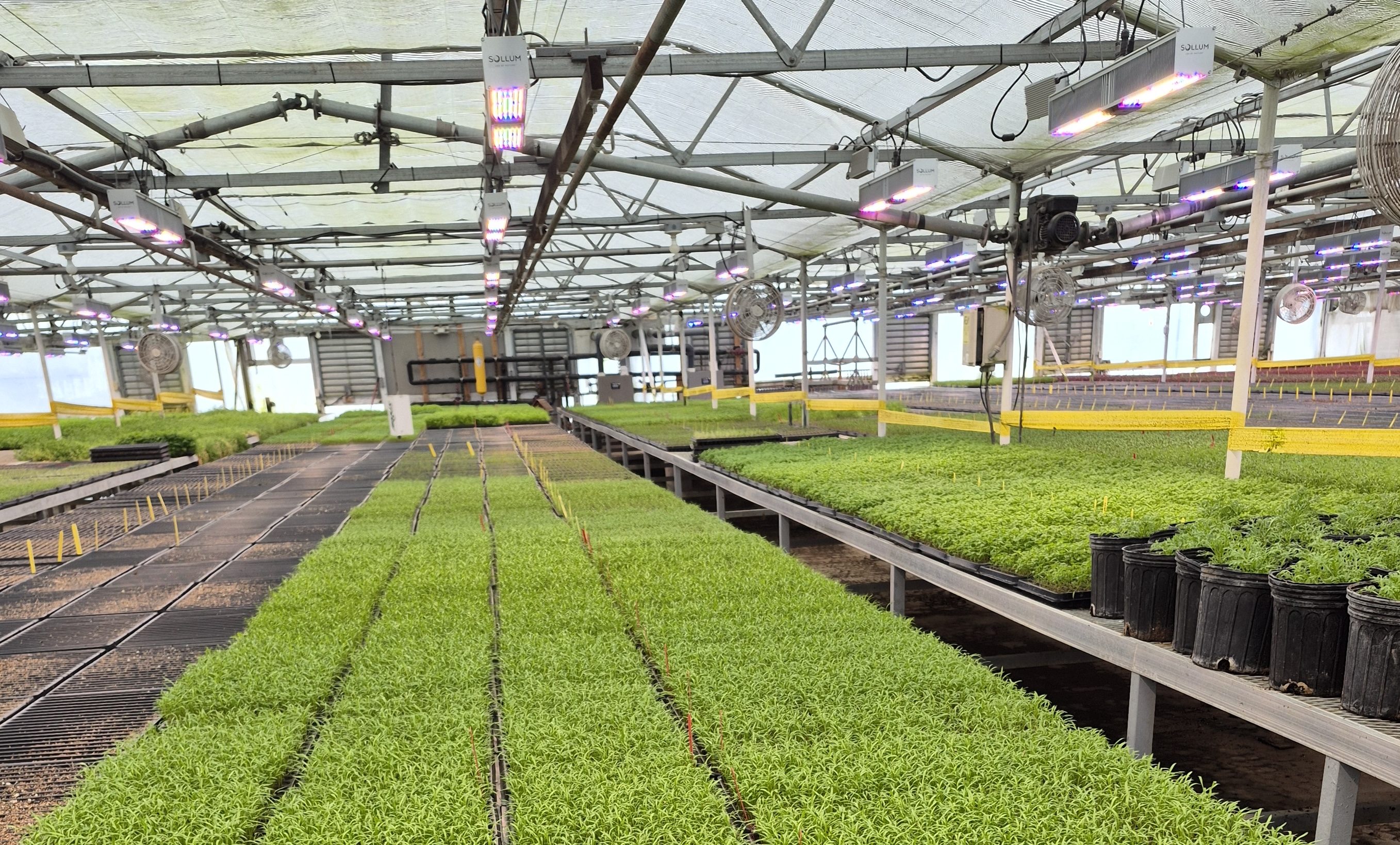
The solution: For greenhouse strawberries, the question is no longer whether to use supplemental light, but how. Newer cultivars respond strongly to lighting strategies, and Sollum's dynamic LED lighting adjusts spectrum, intensity and timing to the crop, the cultivar, the natural sunlight and the grower's objectives.
Using light as a management tool, not just more photons
At KPU's Institute for Sustainable Horticulture (ISH), the goal was to go beyond adding light. The research team asked: how can dynamic LED lighting be optimized for greenhouse strawberries to improve productivity and fruit quality, while also supporting pest and disease management?
The three-year program started in September 2024 and runs through 2027. It is led by Dr. Li Ma, Principal Investigator, with Dr. Deborah Henderson providing co-management and horticultural expertise and postdoctoral researcher Dr. Sarah Murria designing and conducting the experiments. It is a collaboration between KPU, Sollum Technologies and Star Produce, supported by NSERC and Mitacs, and follows an earlier Weston Family Foundation Homegrown Challenge project with Sollum on year-round greenhouse strawberry production.
Trial setup
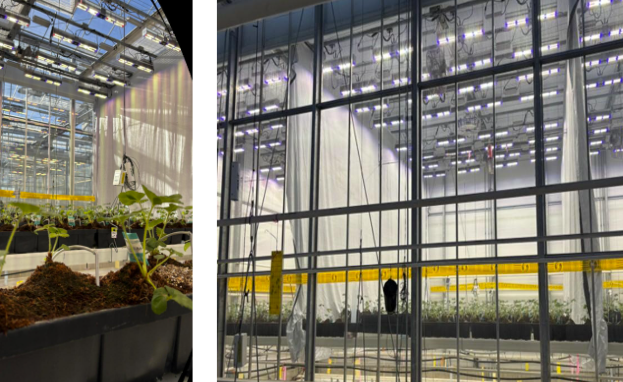
- Greenhouse: a 128 m² research compartment divided into three zones by blackout curtains, each under its own Sollum dynamic LED lighting, so different light recipes run side by side under the same climate.
- Growing conditions: coco coir slabs, 8 plants per linear metre, about 22 °C / 12 °C day/night, 60% relative humidity and a DLI of about 20 mol/m²/day.
- Cultivars: Albion, Charlotte and Seascape, already grown commercially in Canada, and the Lady series (Lady Emma, Lady Isabella, Lady Grace) and Karima, bred for high yield and quality in Europe and now being evaluated for North America.
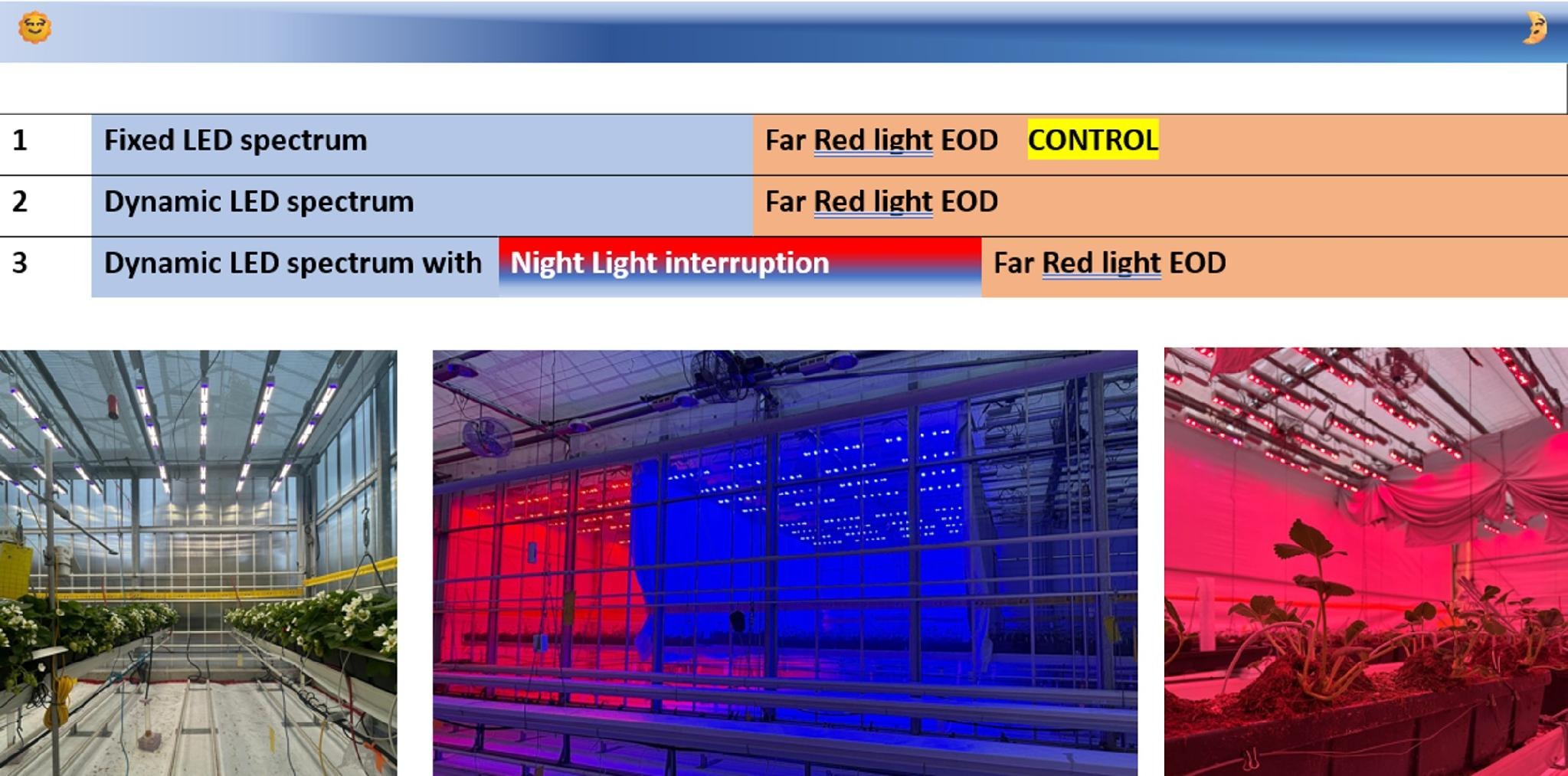
- Trials: photoperiod trials (spring and fall 2025), a night-interruption lighting strategy against powdery mildew (spring 2026) and a red-to-far-red ratio trial (fall 2026, underway), with pest, disease and beneficial-insect observations throughout.
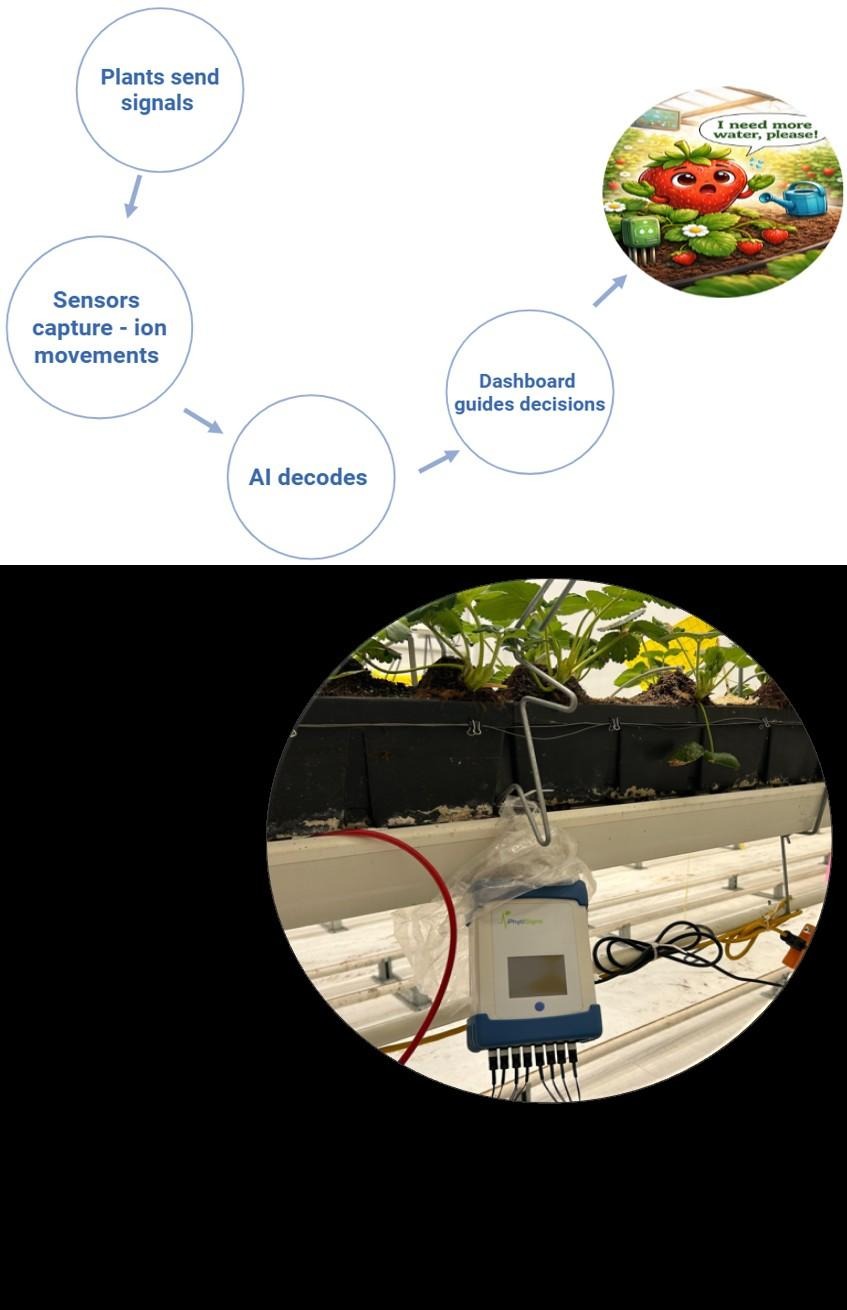
- Measurements: plant growth and morphology, flowering, yield, fruit size, °Brix, acidity, anthocyanins, antioxidants and shelf life. Vivent Biosignals sensors tracked the plants' electrophysiological responses to each treatment in real time.
-
Results: more yield, sweeter fruit and a new tool against disease
In KPU's spring 2025 photoperiod trial, every lighting treatment increased yield per square metre over the 14-hour baseline, in all three cultivars, including +22% for Seascape and +13% for Charlotte under a 16-hour photoperiod.
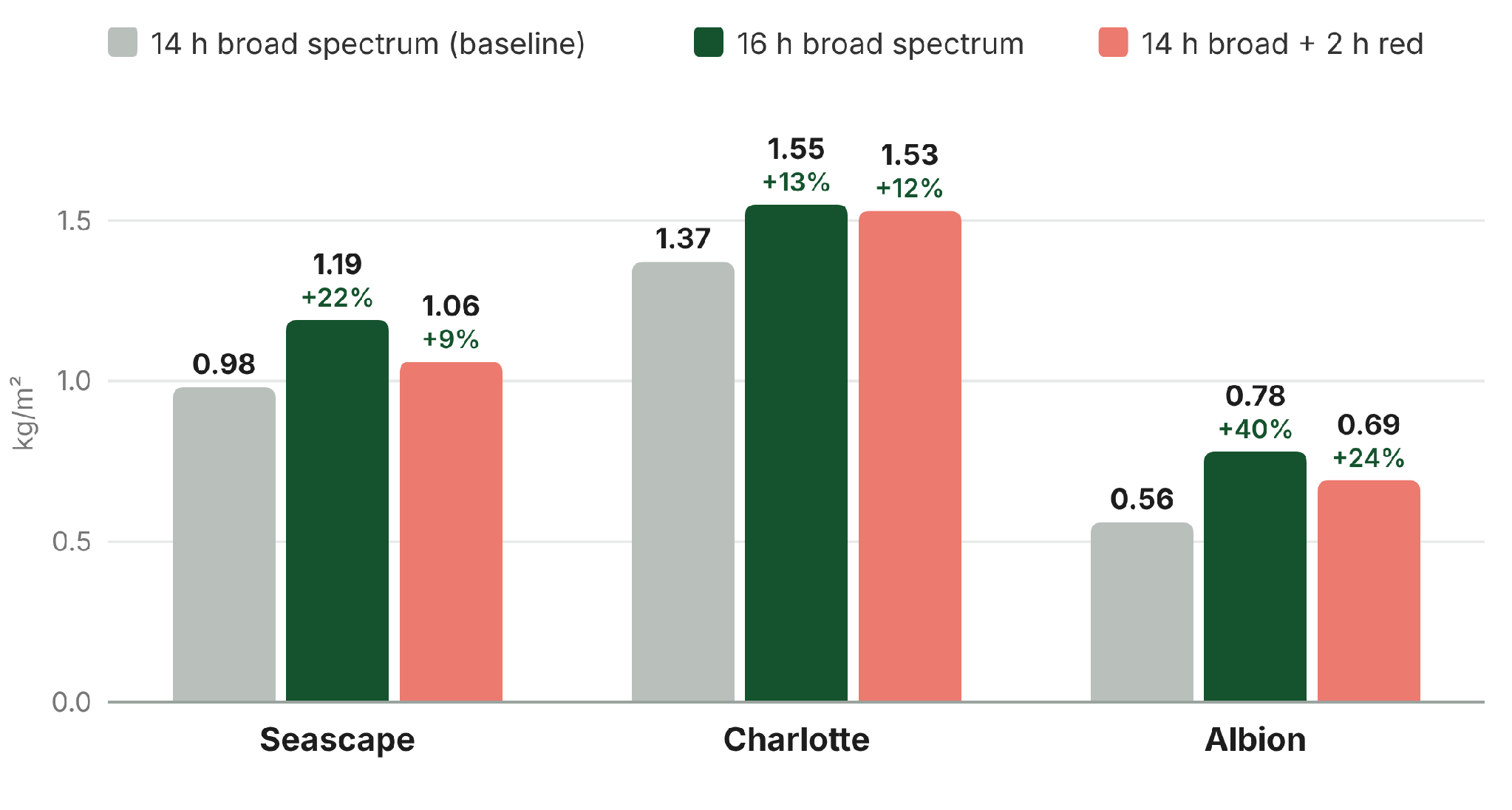
KPU's gutters are spaced further apart than in a commercial greenhouse, and yield was measured over two months only. Over a full production cycle, the yield potential would be much greater.
Fruit quality
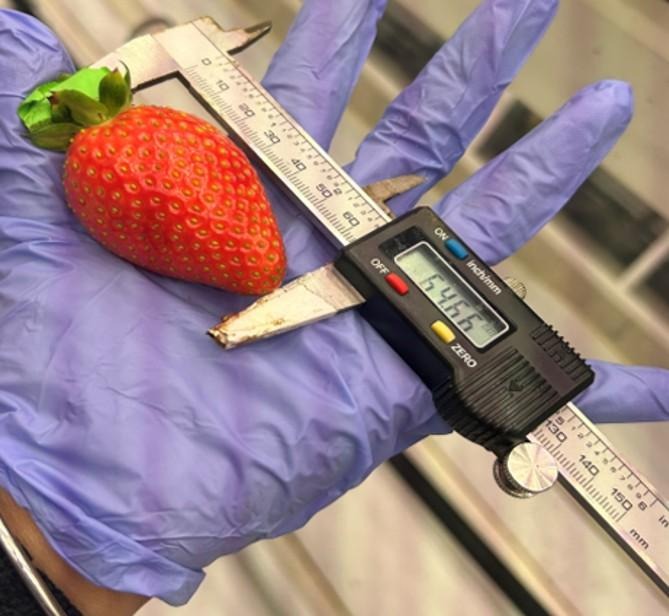
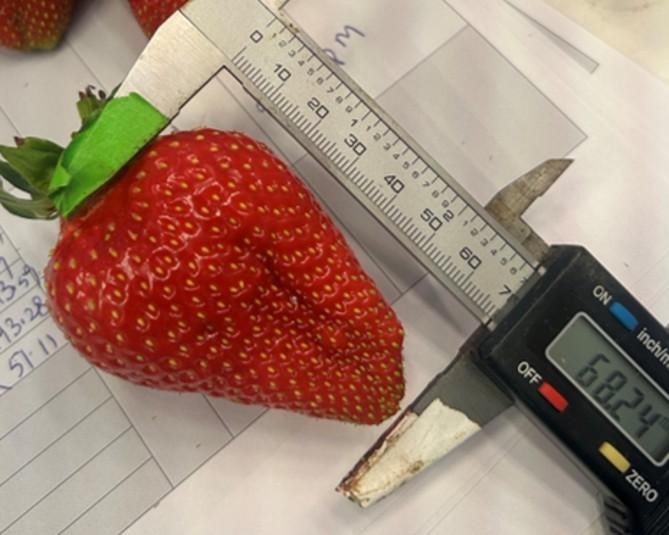
Each part of the spectrum brought something different (preliminary results vs. control):

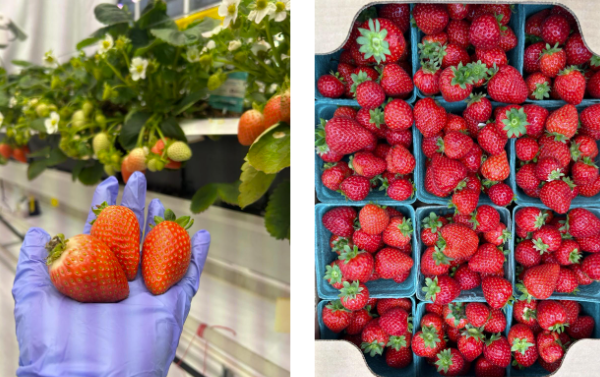
- Blue light gave sweeter, bright red fruit with earlier ripening, more antioxidants and a longer shelf life, and promoted more flower clusters on compact plants.
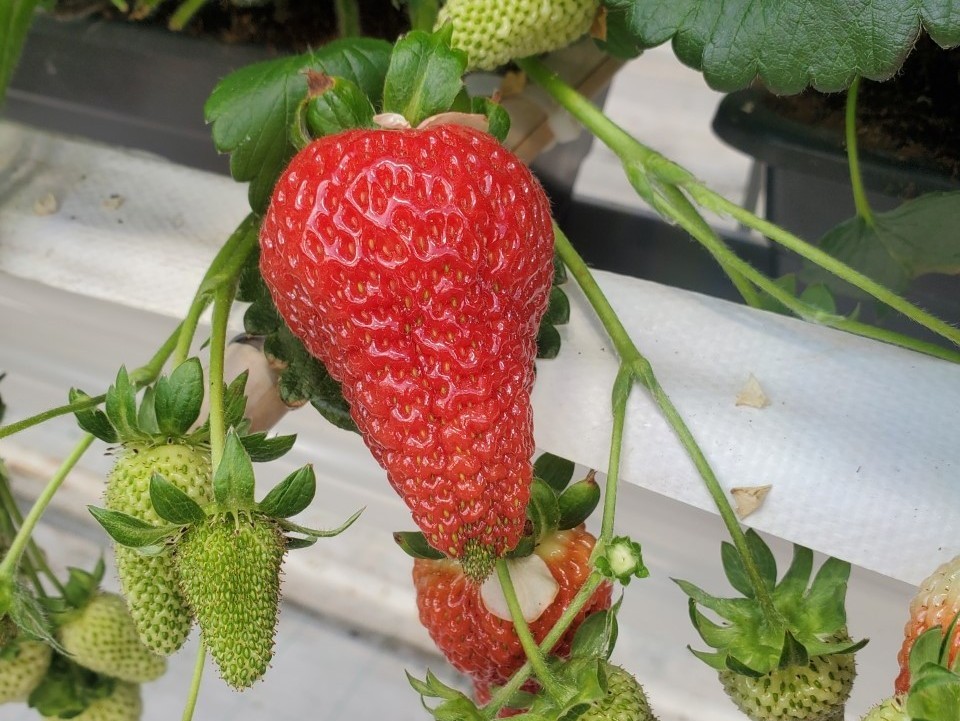
- Red light gave bigger, heavier and sweeter fruit, with higher anthocyanin content and 20% higher average fruit weight.
- Far-red light accelerated ripening and improved canopy architecture.
Plant growth
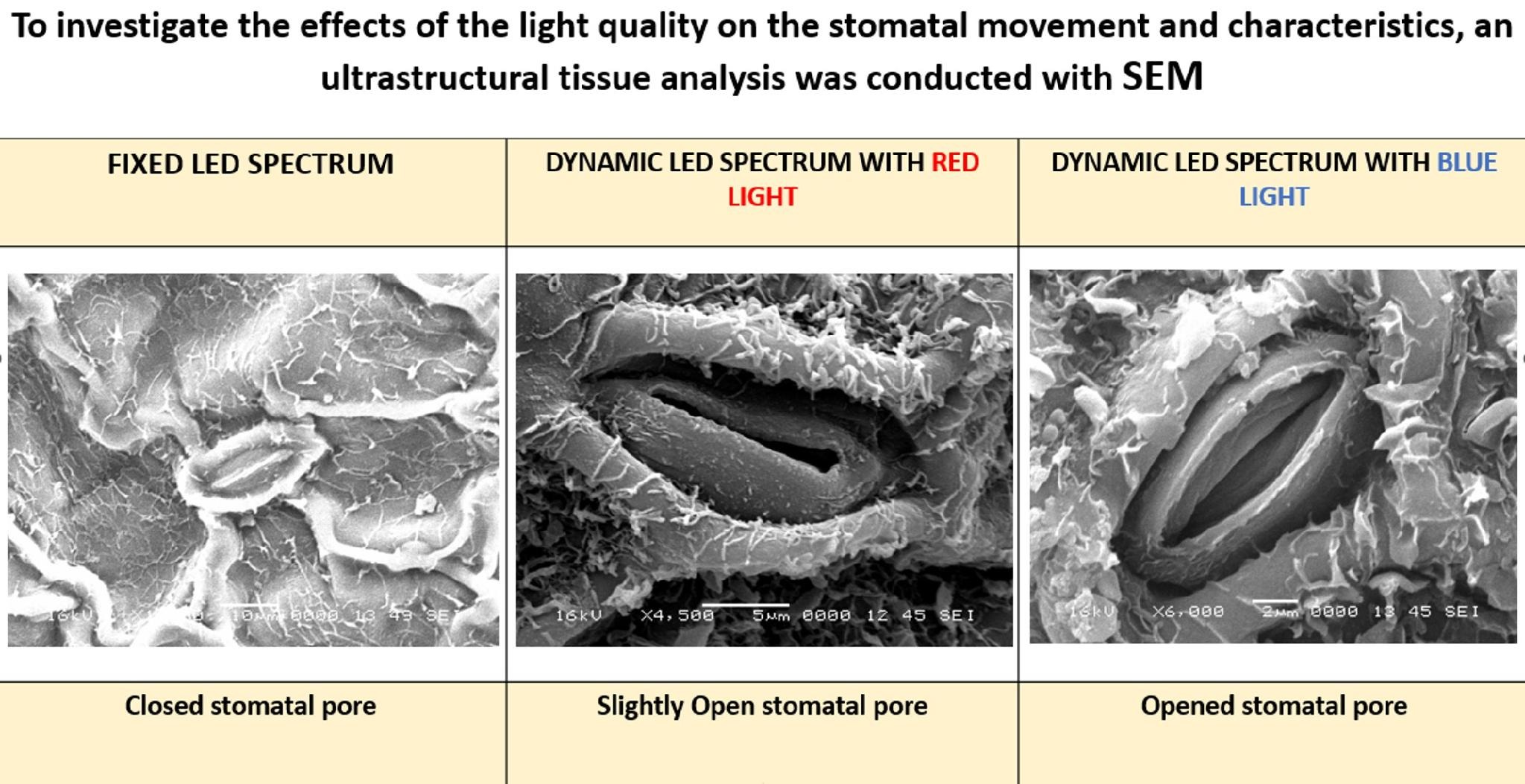
All light treatments increased plant height, leaf area and leaf number compared to the control. Red light produced the largest leaves, longer trusses and petioles for easier harvesting, and higher chlorophyll content. Blue light increased stomatal opening and conductance, as confirmed by scanning electron microscopy.
Disease management
Longer trusses and petioles under red and far-red light open up the canopy and improve airflow, which reduces the conditions that favour fungal diseases. Early results from the night-interruption trial suggest that red or blue night lighting reduces the release of powdery mildew spores. Vivent sensor data also showed less plant stress under dynamic LED lighting during powdery mildew pressure, with fewer and shorter stress events under red light.
In the spring 2026 night-interruption trial, night lighting also held or improved yield in two of three cultivars. Lady Isabella produced 12% more fruit per plant under blue night light and 18% more under red night light, Lady Emma was unchanged, and Lady Grace produced less.
An unexpected finding
Different cultivars responded differently to the same recipe, and some needed three to four weeks to adjust to a new lighting environment while others adapted quickly. The effect of a light treatment should not be judged only on its first few weeks.
“This trial is helping us investigate new strawberry varieties and lighting strategies that can support productive and economically viable winter production in Canada, while identifying approaches that can improve the return on investment for growers. Our partnership with Sollum is particularly valuable because it allows us to explore how dynamic lighting, together with innovative tools such as Vivent Biosignals sensors for monitoring plant electrophysiological responses, can help us better understand plant responses and develop more efficient, data-driven production strategies.”
— Dr. Deborah Henderson, Director, Institute for Sustainable Horticulture, Kwantlen Polytechnic University
What's next at KPU
The 2026–27 trials are underway, refining light recipes for different cultivars, integrating light, climate and fertigation, and generating practical, grower-focused insights.
Strategic and commercial future-proofing
For commercial greenhouse growers, investing in Sollum's dynamic LED lighting is about more than an equipment upgrade. It opens the door to high-value crops in the off-season, gives growers precise control over their lighting, and turns it into a crop-steering tool that can improve yield, fruit quality and plant health, crop after crop.
Conclusion
KPU's trials show that the timing and spectrum of light matter as much as its intensity. Sollum's dynamic LED lighting increased strawberry yield, improved sweetness, colour and fruit size, and opened new ways to manage plant health, as long as the lighting strategy is adapted to each cultivar and greenhouse. With its agronomy team working alongside growers and researchers, Sollum helps turn these findings into light recipes that work in commercial production.
Want to learn more about Sollum Technologies and its dynamic LED grow light solution? Contact our team.
Dr. Abhay Thosar
Chief Horticulture Specialist
abhay@sollum.tech
Jon Adams
VP of Sales, Canada
jon@sollum.tech
About Sollum Technologies
As the leader in advanced dynamic LED lighting for commercial greenhouses, Sollum Technologies offers a unique proposition. The comprehensive solution provides the flexibility to adapt lighting in real time to meet crop needs at every stage of growth, supports producers operational and financial goals in a sustainable manner, and offers unmatched technical and agronomic guidance. Designed and manufactured in North America, Sollum's technology is deployed across major greenhouse operations to support year-round production, consistent quality, and smarter energy use.
Founded in 2015, Sollum is headquartered in Montréal (Québec, Canada) with regional offices in Kingsville (Ontario, Canada) and Atlanta (Georgia, USA). For more information, visit sollum.tech.
Stay informed on growing
Get the latest news, innovations, and insights delivered to your inbox
