
Biophi Strawberry Case Study Web
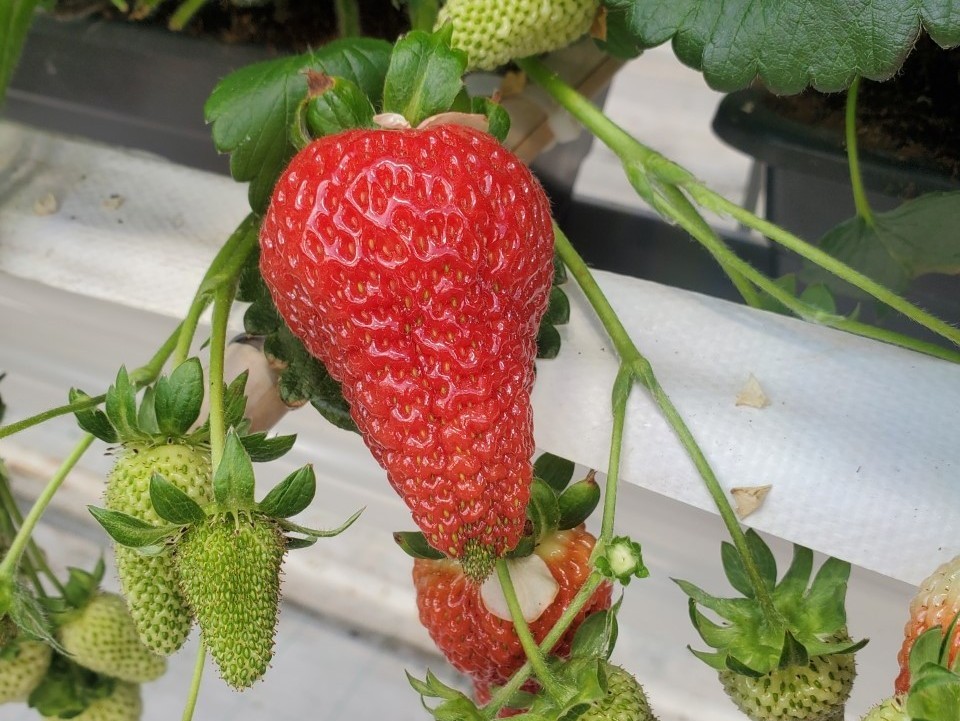
Up to 22 kg/m² of greenhouse strawberries through the winter: Biophi trials Sollum's dynamic LED grow light solution
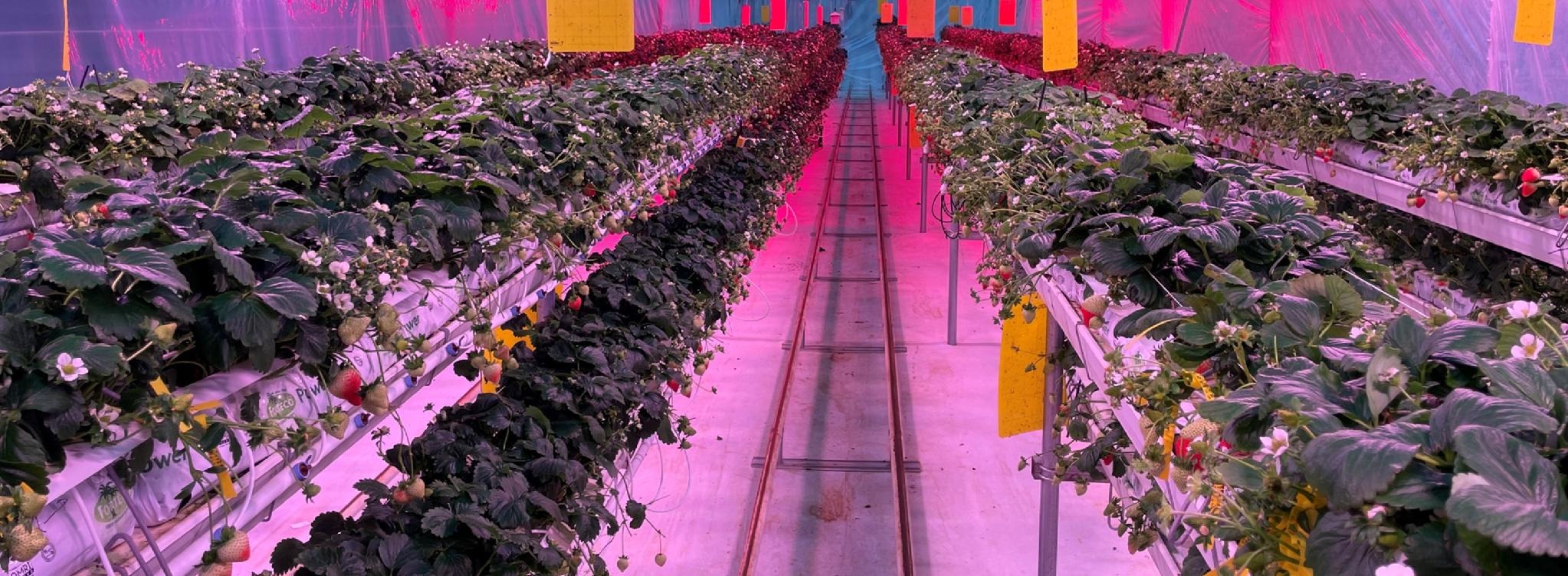
Over a 43-week trial, Biophi tested whether supplemental lighting — and a spectrum that adapts through the day and across the crop cycle — could make winter strawberries productive enough to capture peak-season prices.

Background
The challenge: Canada's low winter light limits greenhouse strawberry production just as seasonal prices peak.
The cost: Supplemental lighting bridges this gap, but it is a major operating expense.
The solution: Dynamic LED systems like Sollum's make the most of that investment by tailoring light spectrum, intensity and timing to the crop and to the grower's objectives.
Testing a dynamic spectrum for winter strawberry production
Biophi partnered with Sollum Technologies with two clear objectives:
- Find out whether supplemental lighting can make winter strawberries productive enough to capture strong winter prices.
- Measure how much a controllable spectrum adds as a research and crop-development tool.
Trial setup
- Trial period: August 2025 to June 2026 (43 weeks).
- Cultivars: Albion and Florice (Flevo Berry, Netherlands).
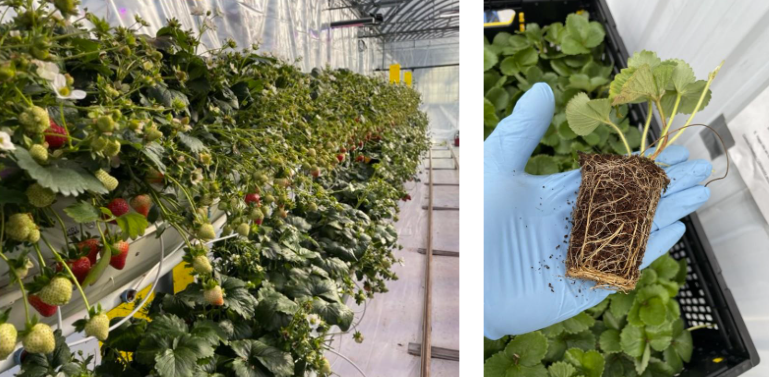
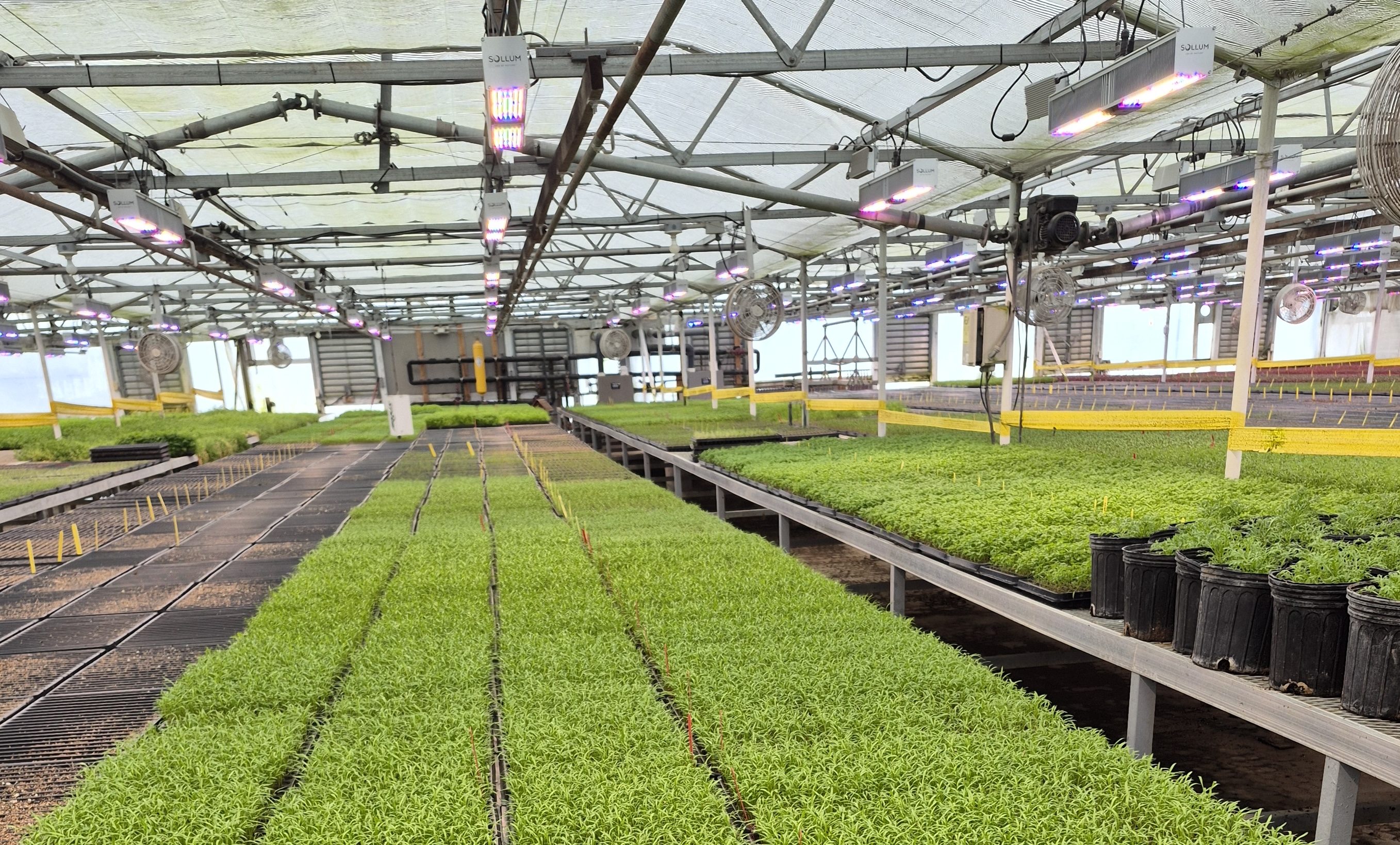
- Growing system: poly greenhouse, double-gutter system, coco substrate, 10 plants per linear metre.
- Light target: daily light integral (DLI) raised from 18 to 20 mol/m²/day during the season to support the growing fruit load.
Two lighting strategies, two pruning approaches
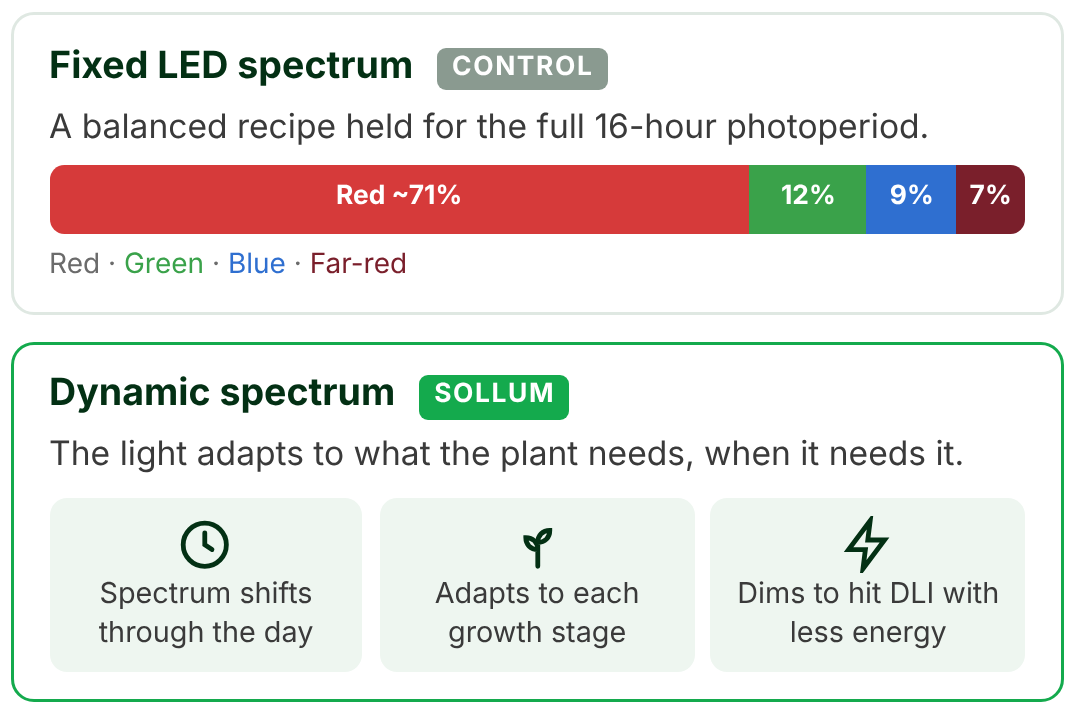
The trial compared a conventional fixed LED recipe against Sollum's dynamic approach:
- Fixed spectrum (control): a balanced recipe of roughly 71% red, 12% green, 9% blue and 7% far-red, held constant across a 16-hour photoperiod.
- Dynamic spectrum: the spectrum shifts through the day and as the crop moves through its growth stages, matching what the plant needs at each point. Intensity is dimmed automatically, so the system reaches the DLI target using less energy.
Each lighting strategy was combined with two pruning approaches: a static rule of four flowers per truss, and a flexible approach adjusted to the plant's fruit load.
Results: up to 22 kg/m², with strong winter production
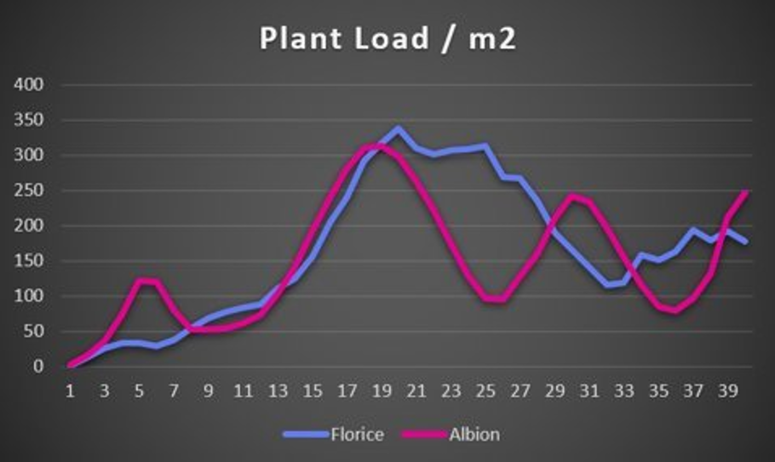
The best-performing combination — Florice under the dynamic spectrum with static pruning — produced 22.0 kg/m² over the 43-week cycle, with strong production through the winter months.
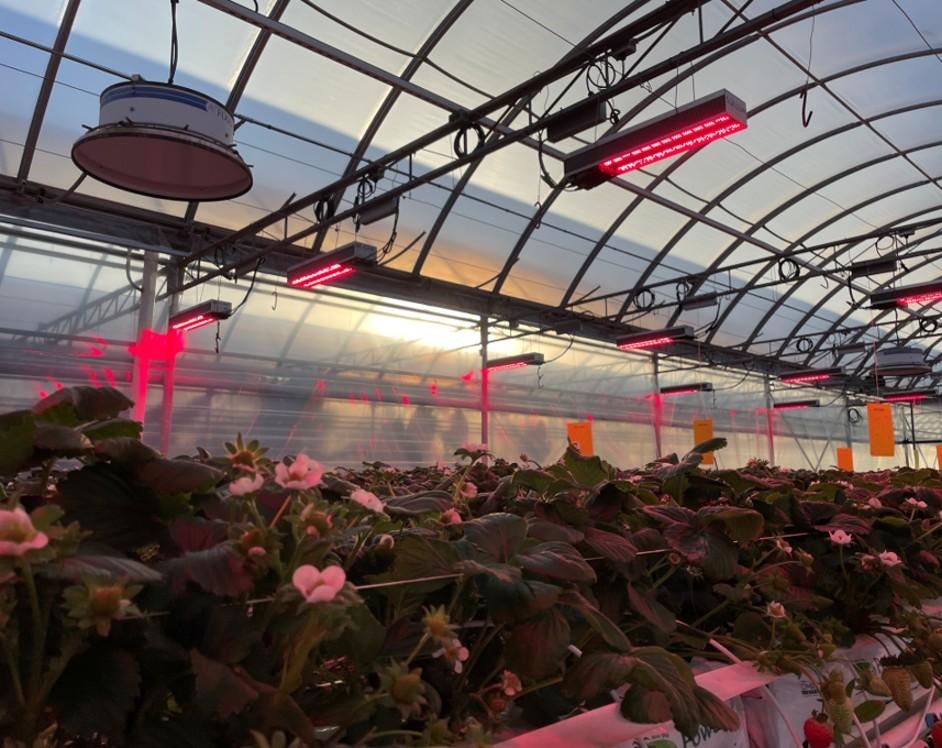
Day-to-day, the system was largely hands-off. The Biophi team set its parameters in the Sollum dashboard and relied on automated dynamic dimming and DLI targeting to do the rest.
“We can set up the parameters and let the system run and do its thing.”
— Noah Weber, R&D Grower, Soft Fruit, Biophi
What's next for winter strawberries
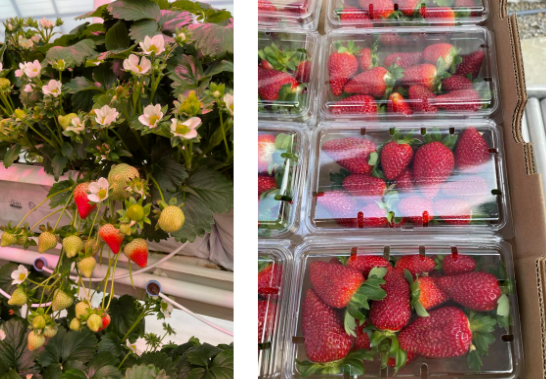
For Biophi, the trial is a proof of concept rather than a ceiling. With a controllable spectrum, the team can keep testing, learning and refining its recipes to push yields further as it builds its understanding of the crop.
“It definitely shows that it can be done and done well. The yield potential is there, and we can probably push strawberries to even greater yields as we understand them better and fine-tune the details to get those extra kilos.”
— Noah Weber, R&D Grower, Soft Fruit, Biophi
Strategic and commercial future-proofing
For commercial greenhouse growers, investing in Sollum's dynamic LED lighting is about more than an equipment upgrade. It opens the door to high-value crops in the off-season, gives growers precise control over their largest variable cost, and turns the lighting system into a research tool that keeps improving results crop after crop.
Conclusion
Biophi's trial shows that winter strawberries can be grown productively under supplemental light, up to 22 kg/m² over 43 weeks, and that a dynamic spectrum gives growers both a production tool and a development platform. For growers looking to supply high-quality local strawberries when prices are at their best, Sollum's technology and agronomy support offer a proven place to start.
Want to learn more about Sollum Technologies and its dynamic LED grow light solution? Contact our team.
Dr. Abhay Thosar
Chief Horticulture Specialist
abhay@sollum.tech
Jon Adams
VP of Sales, Canada
jon@sollum.tech
About Sollum Technologies
As the leader in advanced dynamic LED lighting for commercial greenhouses, Sollum Technologies offers a unique proposition. The comprehensive solution provides the flexibility to adapt lighting in real time to meet crop needs at every stage of growth, supports producers operational and financial goals in a sustainable manner, and offers unmatched technical and agronomic guidance. Designed and manufactured in North America, Sollum's technology is deployed across major greenhouse operations to support year-round production, consistent quality, and smarter energy use.
Founded in 2015, Sollum is headquartered in Montréal (Québec, Canada) with regional offices in Kingsville (Ontario, Canada) and Atlanta (Georgia, USA). For more information, visit sollum.tech.
Stay informed on growing
Get the latest news, innovations, and insights delivered to your inbox
